
White Paper
From Spreadsheets to Strategy: Modern Compensation Management
Introduction
While many companies stick to the familiar routine of spreadsheets and manual emails for compensation cycles, these methods carry hidden costs, heighten risk, and obscure the strategic big picture.
Modern compensation management platforms allow HR and finance leaders to move beyond administration and focus on accuracy, scalability, and strategic outcomes.
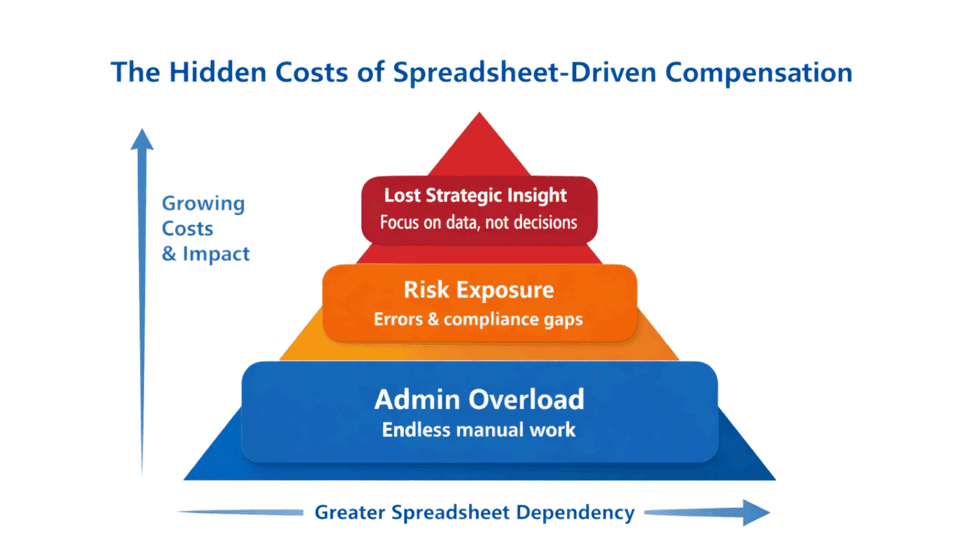
1. The Cost of Spreadsheet-Driven Compensation
- Manual processes increase administrative workload and cycle timelines
- Version control issues create confusion and rework
- Limited visibility makes forecasting and planning difficult
- Errors lead to mispayments, employee trust risks, and compliance exposure
2. Accuracy, Security, and Scalability Gaps
- Accuracy risks from manual formulas and copy-and-paste workflows
- Security challenges when sensitive data lives across multiple files
- Limited scalability as organizations grow in size and complexity
- Lack of audit-ready controls and structured approvals
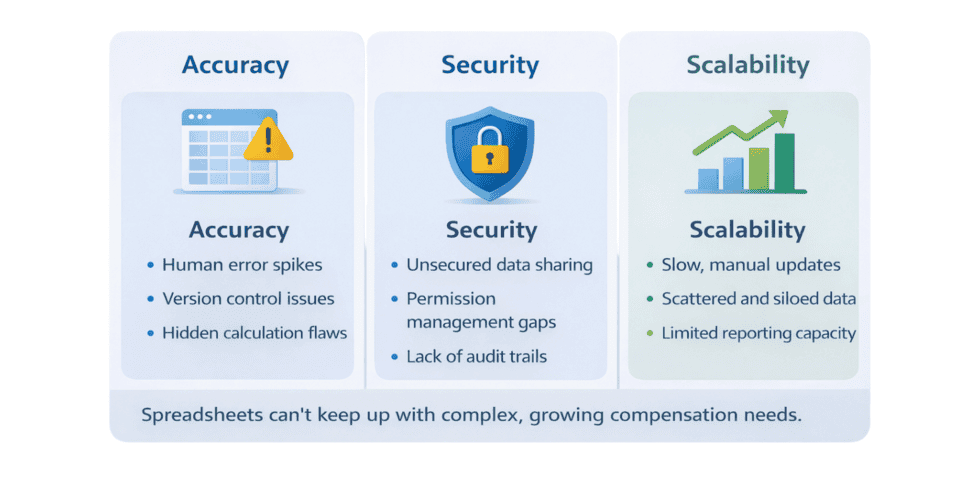
Spreadsheets can’t keep up with complex, growing compensation needs.
3. Manual vs. Modern Platform: Side-by-Side Comparison
Manual Approach
- Disconnected spreadsheets
- Email-based approvals
- Limited audit visibility
- High admin workload
Modern Platform Approach
- One centralized source of truth
- Structured workflows and automated validations
- Real-time reporting and budget tracking
- Built-in controls and audit trails
4. Strategic Outcomes Unlocked
- Greater confidence in compensation decisions
- Faster cycle timelines with fewer errors
- Improved collaboration between HR and Finance
- Data-driven workforce planning
- Clear, defensible decision records
Final Thought
Modern compensation management is no longer just an operational upgrade; it is a strategic shift. Organizations that move beyond spreadsheets gain clarity, control, and the ability to align rewards with business outcomes at scale.