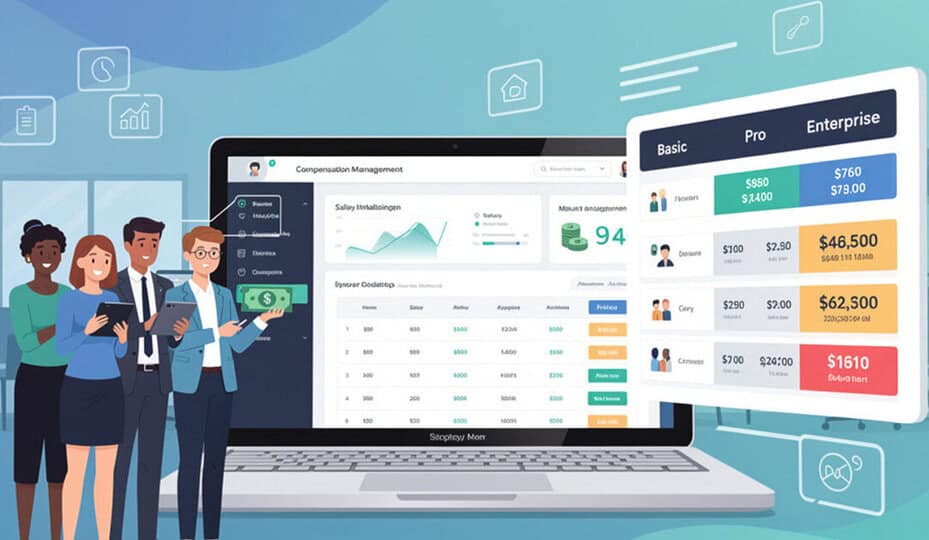
Bonus software automates payouts and syncs with performance and HR data.
Manual bonus tracking leads to costly errors and trust issues.
Real-time dashboards improve transparency and reduce payout disputes.
Clean data and change management are critical for successful rollout.
What Is Bonus Management in Compensation Software?
Bonus management in compensation software is a module or platform that centralizes incentive plan design, automates payout calculations, and tracks performance against targets in real time.
It replaces manual workflows by integrating with your HRIS, payroll, and review systems using configurable rules to align with your processes. The platform simplifies eligibility, budgeting, and approvals so HR and finance can focus on strategy through an interface that’s easy to learn and use.
That centralization matters because bonus structures have become more complex. Teams may receive quarterly bonuses tied to project outcomes, peer ratings, or departmental performance metrics.
A dedicated system enforces consistency, flags budget overruns before approvals go out, and generates audit trails that satisfy both internal controls and external regulators.
The shift from annual bonuses to more frequent incentive cycles has forced HR teams to rethink their toolset. Most organizations still patch together Excel templates and email chains, then wonder why payout errors spike during peak periods.
Why Accurate Bonus Tracking Drives Retention
Manual bonus processes cost more than time. When top performers wait eight weeks for a payout or discover their manager miscalculated the multiplier, trust erodes fast.
Compensation software closes those gaps by publishing dashboards that show employees their progress against goals in real time.
Managers approve payouts with one click instead of chasing signatures across departments, while finance locks budgets at the plan level so no single manager can exceed their allocation without triggering a workflow alert.
Research shows that unclear incentive criteria consistently ranks among the top workplace frustrations, and organizations with opaque bonus processes typically see turnover rates nearly double those with transparent systems.
Automated systems help reduce disputes, shorten cycles, and clarify the link between performance and reward.
Automated tracking also surfaces patterns that spreadsheets hide. Compensation platforms regularly flag formula errors that affect 15 to 25 percent of bonus recipients, issues that organizations discover only after frustrated employees escalate complaints.
The software catches these discrepancies during calculation rather than after payout, protecting both employee trust and company credibility.
Key Features to Look For
Not every platform handles bonuses the same way, but the most effective systems share five core capabilities.
Before you demo vendors, map your current process and identify which pain points matter most, then evaluate whether each platform delivers on these requirements.
Plan flexibility: The system should accommodate multiple incentive structures, such as individual quotas, team targets, and company-wide profit sharing, without requiring custom code for each variant.
Real-time calculation: As performance data flows in from your CRM or project tracker, the software updates accrual estimates so employees and managers see current payout projections.
Approval workflows: Multi-tier sign-off routes let you enforce budget controls, require HR review for off-cycle awards, and log every decision for audit compliance.
Integration depth: Native connectors to your HRIS, payroll, and financial planning systems eliminate duplicate entries and keep eligibility rules in sync with headcount changes.
Reporting granularity: Pre-built dashboards for cost per employee, payout variance by department, and attainment distribution help executives spot trends and adjust plans mid-cycle.
These features work together to reduce cycle time and improve accuracy.
Organizations that automate the handoff between performance review completion and bonus calculation typically cut weeks off their quarterly close, replacing email threads with structured workflows that enforce sign-off sequences.
How to Implement Bonus Management Software
Rolling out a new compensation platform requires planning beyond the technical setup, and the most successful implementations follow a phased approach that builds confidence across teams.
Involve stakeholders early and run a pilot before company-wide launch so you can catch edge cases and refine workflows without disrupting live payroll cycles.
Start with these five steps:
Audit your current bonus plans and document every eligibility rule, payout formula, approval threshold, and reporting requirement in a single schema.
Select a pilot group of 20 to 50 employees across at least two departments so you can test different plan types and catch edge cases before full rollout.
Configure the platform by mapping your schema to the software’s data model, then validate calculations with finance by running parallel payouts for one cycle.
Train managers and employees using role-specific guides that show exactly how to submit goals, track progress, and approve payouts without referencing the admin manual.
Monitor the first live cycle closely, holding weekly check-ins with HR, finance, and IT to resolve issues before they compound into larger problems.
Pilot programs often reveal gaps in standard features, such as the need for bulk-approval tools when managers oversee teams of more than 10 people.
Vendors can typically add these capabilities within weeks if you flag them during the test phase, which is why running a controlled pilot saves time compared to discovering missing functionality during a full rollout.
What Usually Goes Wrong During Implementation
Even well-designed systems stumble when organizations skip foundational work, and three traps repeatedly appear across industries.
Over-engineering plans, ignoring data hygiene, and underestimating change management are the main causes of implementation delays and post-launch disputes.
The first mistake happens during plan design.
Compensation teams sometimes create 15 different bonus tiers with unique modifiers for tenure, role level, and geographic cost of labor. That complexity paralyzes the software and confuses employees.
Instead, consolidate plans wherever possible, aiming for three to five core structures that cover 90 percent of your population. Simpler structures also make the next critical step easier.
That step is data cleanup, which most teams treat as optional until calculations start failing.
Bonus software relies on accurate employee records, and when job codes, manager assignments, or start dates are outdated or missing, the entire system produces wrong numbers.
I always suggest auditing your HRIS before migration and establishing a quarterly reconciliation to catch drift. Clean data feeds clean calculations, but even a perfect technical setup falls apart without the human side.
Lastly, change management is where technically successful implementations lose executive support.
Employees who have consistently received paper checks or lump-sum deposits will ask questions when payouts appear as line items on a dashboard. Address these proactively so that they don’t become issues.
Create FAQs, host live Q&A sessions, and give managers talking points so they can address concerns without escalating every case to HR.
Skip this step, and you risk what happened to one manufacturing client. They lost executive buy-in three months post-launch because they did not clean up 400 outdated org chart entries before go-live.
The software calculated bonuses based on stale manager relationships, triggering dozens of disputes and forcing a manual recalculation that took five weeks. A two-day data scrub would have prevented the entire crisis.
Why CompLogix Is Built for Bonus Management
Managing bonuses with spreadsheets creates friction where clarity is needed. Manual steps lead to errors, missed approvals, and payout delays that frustrate everyone involved. CompLogix solves these problems by giving HR a platform built for visibility, control, and speed.
With CompLogix, your entire bonus process lives in one secure, easy-to-use system. You can:
Generate audit-ready reports that satisfy finance and compliance
Instead of rebuilding the same process every quarter, you create a repeatable system that adapts as your business grows. And because CompLogix integrates with your HRIS and payroll platforms, it fits into your workflow without adding complexity.
Whether you manage one bonus plan or fifteen, CompLogix gives you the tools to do it with confidence, accuracy, and far less hassle. We help you move faster, communicate clearly, and make bonus programs something people trust again.
Moving Forward with Confidence
Bonus management in compensation software transforms a high-stakes, error-prone process into a repeatable system that scales with your workforce. The right platform gives you transparent tracking, automated workflows, and audit-ready reporting so you can spend less time fixing spreadsheets and more time refining your incentive strategy.
Start by documenting your current bonus plans in detail, then prioritize the features that address your biggest pain points. Run a focused pilot with cross-functional input and invest time in data cleanup before migration.
When your teams see real-time progress and timely payouts, you build trust, boost retention, and finally escape the chaos of manual bonus cycles.
I’ve spent the last decade watching HR teams struggle with spreadsheet-driven compensation reviews that consumed weeks of effort yet still produced questionable pay decisions.
The shift toward data-driven compensation analytics has transformed how organizations approach fair pay, compliance, and strategic workforce planning.
Modern compensation analytics and reporting modules represent more than software upgrades. They provide the foundation for evidence-based pay decisions that protect both employees and employers while ensuring compliance with evolving transparency laws.
Key Takeaways
Compensation analytics uncovers hidden pay gaps and equity issues.
Advanced tools ensure legal compliance with transparency mandates.
Real-time dashboards enhance equity, planning, and retention.
Successful adoption needs training, metrics, and stakeholder buy-in.
Understanding Advanced Compensation Analytics
Compensation analytics is the systematic collection, analysis, and interpretation of pay data to guide strategic compensation decisions.
Unlike traditional spreadsheet methods, modern analytics platforms integrate internal salary data with external market benchmarks to create comprehensive views of organizational pay structures.
When I first implemented analytics at a mid-sized tech company, our initial audit revealed 18 percent pay gaps across similar roles that manual reviews had missed entirely. The platform’s statistical analysis identified patterns invisible to traditional methods.
Advanced analytics platforms utilize several key components:
Internal Data Integration: Base pay, bonuses, performance ratings, tenure, and demographic information flow from existing HR systems.
External Benchmarking: Market pricing data from salary surveys ensures competitive positioning.
Statistical Methods: Regression analysis, distribution modeling, and variability measures identify outliers and trends.
These analytical methods transform raw compensation data into actionable insights that support fair, defensible pay practices.
The Importance of Compensation Analytics
Pay-transparency legislation across multiple jurisdictions has fundamentally changed compensation management requirements. Recent laws in Massachusetts, Vermont, and Cleveland mandate salary range disclosure in job postings, with enforcement actions imposing fines of up to imposing fines up to $6,000 per violation.
Compensation analytics platforms offer structured approaches to compliance while supporting broader strategic objectives.
Automated pay-equity analyses proactively identify disparities, addressing potential legal risks before they escalate into compliance issues.
On the other hand, real-time salary range calculations ensure accuracy in job postings, aligning directly with transparency requirements.
Beyond compliance, analytics drive strategic workforce planning, delivering data-driven insights that shape talent retention and acquisition strategies.
These platforms also enhance audit preparedness by maintaining comprehensive documentation, creating defensible pay practices critical during regulatory reviews.
Organizations operating without systematic analytics face increasing vulnerability as enforcement intensifies and transparency obligations continue to expand.
Core Features of Compensation Management Software
Modern compensation platforms integrate multiple data sources and analytical capabilities to streamline pay management workflows. These systems eliminate manual processes while providing sophisticated analysis tools.
Essential platform features usually include:
Data Integration Capabilities: Seamless connections with HRIS, payroll, and performance systems ensure continuous data updates.
Statistical Analysis Tools: Built-in regression analysis, distribution modeling, and outlier detection support evidence-based decisions.
Scenario Modeling: What-if analysis across different pay structures, budgets, and market conditions.
Advanced platforms like CompLogix integrate salary benchmark data from to align internal pay with market rates automatically. This integration provides continuous market positioning insights without manual data collection efforts.
User-based access controls also ensure sensitive compensation data remains secure while enabling appropriate stakeholders to access relevant information.
Multi-currency support accommodates global organizations managing compensation across different markets and regulatory environments.
How to Adopt Compensation Analytics: A Short Guide
Implementing analytics for compensation management involves structured planning and clear alignment among stakeholders.
The following steps, drawn from experience with multiple successful implementations, outline a practical approach to ensure your organization gains maximum value from its analytics investment..
1. Assess Your Current State
Begin by auditing your existing compensation data, processes, and technology infrastructure. Identify critical gaps and specific requirements that the analytics solution needs to address.
2. Define Clear Success Metrics
Establish objectives around efficiency gains, improved compliance, and better decision-making. Having defined targets makes measuring progress straightforward and keeps everyone aligned.
3. Evaluate and Select the Right Platform
Compare available analytics platforms based on their integration capabilities, analytical tools, and the quality of vendor support. Choose a solution that aligns closely with your identified needs.
4. Plan for Data Migration
Develop a comprehensive strategy for migrating historical compensation data. Your plan must prioritize accuracy and completeness to avoid gaps or errors that could compromise analysis quality.
5. Train Teams Thoroughly
Equip HR teams, managers, and system administrators with the skills to confidently navigate new workflows and system features. Effective training is vital to adoption success and ongoing user satisfaction.
Don’t forget about change management, either! Effective change management is crucial to adoption success.
Clearly communicate the value and benefits of analytics to stakeholders, provide sufficient training resources, and maintain robust support during the transition.
Frequently Asked Questions
Common questions about compensation analytics implementation help clarify practical considerations for organizations evaluating these solutions.
How does analytics software ensure compliance?
Platforms provide automated pay-equity analysis, salary range calculations for job postings, audit trail documentation, and real-time monitoring for regulatory requirement changes.
What are typical implementation costs?
Costs vary significantly based on organization size, feature requirements, and integration complexity, ranging from thousands to hundreds of thousands annually for enterprise solutions.
How long does implementation typically take?
Most organizations complete basic implementation within 3-6 months, while comprehensive rollouts with advanced analytics may require 12-18 months depending on data quality and change management needs.
What technical expertise is required?
Modern platforms require minimal technical skills for basic usage, though organizations benefit from having analytical expertise for advanced statistical analysis and strategic interpretation of results.
I’ve spent the last decade watching HR teams struggle with spreadsheet-driven compensation reviews that consumed weeks of effort yet still produced questionable pay decisions.
The shift toward data-driven compensation analytics has transformed how organizations approach fair pay, compliance, and strategic workforce planning.
Modern compensation analytics and reporting modules represent more than software upgrades. They provide the foundation for evidence-based pay decisions that protect both employees and employers while ensuring compliance with evolving transparency laws.
Key Takeaways
Compensation analytics replaces guesswork with data-driven, fair pay decisions.
Modern platforms offer real-time insights, equity audits, and compliance tools.
Predictive analytics help forecast retention risks and budget outcomes.
Implementation success depends on training, metrics, and stakeholder alignment.
Understanding Advanced Compensation Analytics
Compensation analytics is the systematic collection, analysis, and interpretation of pay data to guide strategic compensation decisions.
Unlike traditional spreadsheet methods, modern analytics platforms integrate internal salary data with external market benchmarks to create comprehensive views of organizational pay structures.
When I first implemented analytics at a mid-sized tech company, our initial audit revealed 18 percent pay gaps across similar roles that manual reviews had missed entirely. The platform’s statistical analysis identified patterns invisible to traditional methods.
Advanced analytics platforms utilize several key components:
Internal Data Integration: Base pay, bonuses, performance ratings, tenure, and demographic information flow from existing HR systems.
External Benchmarking: Market pricing data from salary surveys ensures competitive positioning.
Statistical Methods: Regression analysis, distribution modeling, and variability measures identify outliers and trends.
These analytical methods transform raw compensation data into actionable insights that support fair, defensible pay practices.
The Importance of Compensation Analytics
Pay-transparency legislation across multiple jurisdictions has fundamentally changed compensation management requirements. Recent laws in Massachusetts, Vermont, and Cleveland mandate salary range disclosure in job postings, with enforcement actions imposing fines of up to imposing fines up to $6,000 per violation.
Compensation analytics platforms offer structured approaches to compliance while supporting broader strategic objectives.
Automated pay-equity analyses proactively identify disparities, addressing potential legal risks before they escalate into compliance issues.
On the other hand, real-time salary range calculations ensure accuracy in job postings, aligning directly with transparency requirements.
Beyond compliance, analytics drive strategic workforce planning, delivering data-driven insights that shape talent retention and acquisition strategies.
These platforms also enhance audit preparedness by maintaining comprehensive documentation, creating defensible pay practices critical during regulatory reviews.
Organizations operating without systematic analytics face increasing vulnerability as enforcement intensifies and transparency obligations continue to expand.
Core Features of Compensation Management Software
Modern compensation platforms integrate multiple data sources and analytical capabilities to streamline pay management workflows. These systems eliminate manual processes while providing sophisticated analysis tools.
Essential platform features usually include:
Data Integration Capabilities: Seamless connections with HRIS, payroll, and performance systems ensure continuous data updates.
Statistical Analysis Tools: Built-in regression analysis, distribution modeling, and outlier detection support evidence-based decisions.
Scenario Modeling: What-if analysis across different pay structures, budgets, and market conditions.
Advanced platforms like CompLogix integrate salary benchmark data to align internal pay with market rates automatically. This integration provides continuous market positioning insights without manual data collection efforts.
User-based access controls also ensure sensitive compensation data remains secure while enabling appropriate stakeholders to access relevant information.
Multi-currency support accommodates global organizations managing compensation across different markets and regulatory environments.
How to Adopt Compensation Analytics: A Short Guide
Implementing analytics for compensation management involves structured planning and clear alignment among stakeholders.
The following steps, drawn from experience with multiple successful implementations, outline a practical approach to ensure your organization gains maximum value from its analytics investment..
1. Assess Your Current State
Begin by auditing your existing compensation data, processes, and technology infrastructure. Identify critical gaps and specific requirements that the analytics solution needs to address.
2. Define Clear Success Metrics
Establish objectives around efficiency gains, improved compliance, and better decision-making. Having defined targets makes measuring progress straightforward and keeps everyone aligned.
3. Evaluate and Select the Right Platform
Compare available analytics platforms based on their integration capabilities, analytical tools, and the quality of vendor support. Choose a solution that aligns closely with your identified needs.
4. Plan for Data Migration
Develop a comprehensive strategy for migrating historical compensation data. Your plan must prioritize accuracy and completeness to avoid gaps or errors that could compromise analysis quality.
5. Train Teams Thoroughly
Equip HR teams, managers, and system administrators with the skills to confidently navigate new workflows and system features. Effective training is vital to adoption success and ongoing user satisfaction.
Don’t forget about change management, either! Effective change management is crucial to adoption success.
Clearly communicate the value and benefits of analytics to stakeholders, provide sufficient training resources, and maintain robust support during the transition.
Frequently Asked Questions
Common questions about compensation analytics implementation help clarify practical considerations for organizations evaluating these solutions.
How does analytics software ensure compliance?
Platforms provide automated pay-equity analysis, salary range calculations for job postings, audit trail documentation, and real-time monitoring for regulatory requirement changes.
What are typical implementation costs?
Costs vary significantly based on organization size, feature requirements, and integration complexity, ranging from thousands to hundreds of thousands annually for enterprise solutions.
How long does implementation typically take?
Most organizations complete basic implementation within 3-6 weeks, while comprehensive rollouts with advanced analytics may require 2-3 months depending on data quality and change management needs.
What technical expertise is required?
Modern platforms require minimal technical skills for basic usage, though organizations benefit from having analytical expertise for advanced statistical analysis and strategic interpretation of results.
When I helped a mid-sized tech company replace their maze of compensation spreadsheets last year, the HR director told me something that stuck: “We’ve been managing million-dollar decisions with tools from 1995.”
That got me thinking about exactly how compensation management has evolved from a back-office function into a strategic imperative.
The global market valued at US$5.7B in 2024 reflects this shift, as organizations recognize that smart pay practices drive both compliance and competitive advantage.
But to fully appreciate today’s software-driven strategies, it’s worth stepping back and seeing how far we’ve come.
Key Takeaways
Compensation management evolved from manual spreadsheets to AI-driven strategy tools.
Global market growth and new regulations are fueling rapid software adoption.
Modern platforms enable predictive budgeting, global benchmarking, and compliance tracking.
Organizations using advanced compensation tools gain agility, equity, and data security.
The Historical Evolution of Compensation Practices
Understanding current compensation trends means first recognizing how dramatically practices have changed.
In the late 1970s, payroll processing shifted from manual ledgers to early computerized systems. Although basic by today’s standards, these first-generation tools significantly cut calculation times and reduced costly errors, laying initial groundwork for automation.
The 1990s brought integrated Human Resource Information Systems (HRIS) and Enterprise Resource Planning (ERP). By unifying employee records, payroll, and recruitment, HR departments reduced manual handling by up to 45%.
Cloud technology reshaped HR again in the early 2000s, introducing remote access and real-time analytics. AI advancements in the 2010s further evolved practices from reactive spreadsheets to predictive insights, enabling strategic planning.
Today, ongoing feedback loops and agile adjustments mark compensation strategies, reflecting broader shifts in workplace expectations around transparency and fairness.
Market Landscape and Industry Drivers
Compensation management software sits at the intersection of several powerful market forces that are accelerating adoption across industries:
Market Growth: The sector projects explosive growth from $5.7 billion in 2024 to $29.9 billion by 2037, representing a 13.6% compound annual growth rate that outpaces most enterprise software categories.
Regulatory Pressure: Pay transparency laws in multiple states and evolving AI governance requirements create compliance complexity that manual processes simply cannot handle at scale.
Talent Competition: Hybrid work models and skills shortages force organizations to compete on total rewards packages, not just base salaries, requiring sophisticated tools to model and communicate value.
Technology Integration: Modern platforms connect compensation data with performance management, learning systems, and employee engagement tools, creating holistic talent experiences.
These drivers suggest that compensation software adoption will shift from optional to essential, particularly for organizations managing complex pay structures across multiple locations.
During a recent client implementation, I watched an HR team model 15 different salary scenarios in the time it previously took to update a single spreadsheet. That acceleration illustrates how cutting-edge technologies are revolutionizing compensation planning.
Several key technological innovations have accelerated the move from manual spreadsheets to proactive, dynamic compensation strategies:
1. AI-Driven Recommendations
Modern platforms use machine learning to analyze performance data, market benchmarks, and internal equity patterns, then suggest salary adjustments in real time.
A Mercer survey found that AI could replace 52% of total‑rewards workloads, freeing strategic thinkers to focus on policy rather than calculations.
2. Predictive Budgeting Models
Advanced analytics enable scenario planning that considers market volatility, performance distributions, and retention risks. These tools help leadership model compensation costs under different growth assumptions.
3. Dynamic Bonus Management
Platforms now track team-based incentives and adjust payouts based on real-time performance metrics or company profitability, moving beyond static annual bonuses.
4. Global Benchmarking Integration
Software leverages worldwide salary databases to benchmark pay across regions while adjusting for cost-of-living differences, essential for multinational organizations.
The shift from reactive spreadsheet management to proactive, data-driven decision-making represents the most significant change in compensation practices since the introduction of computerized payroll.
Addressing Challenges and Misconceptions
Despite technological advances, several persistent myths continue to limit adoption of modern compensation management tools. The most common misconception centers on cost and complexity.
Aeqium research shows 47% of organizations still rely on HRIS modules or spreadsheets, often citing budget constraints. While dedicated platforms may cost $350+ monthly for smaller teams, this investment typically pays for itself through reduced errors, faster cycle times, and improved compliance.
Spreadsheet dependency also creates hidden risks that many leaders underestimate. Version control issues, accidental data exposure, and calculation errors compound over time.
During a recent audit, we discovered that a client’s manual process contained salary discrepancies affecting 23% of employees, creating both legal exposure and morale problems. Unaddressed, this could have caused much larger issues down the line.
Data security concerns also persist, though modern platforms address these through encryption, role-based access controls, and compliance with privacy regulations like GDPR and CCPA. The real security risk often lies with email attachments and shared drives containing sensitive compensation data.
These challenges highlight why organizations need clear evaluation criteria and realistic timelines when considering compensation technology upgrades.
Regulatory and Compliance Impacts
In additions to the common challenges of the industry, regulations and compliance should also be top of mind.
The regulatory landscape surrounding compensation continues to evolve rapidly, creating compliance challenges that manual processes struggle to address.
State Pay Transparency Laws
New Jersey’s law effective June 2025 requires employers with 10+ employees to include salary ranges and benefits in job postings. Vermont’s Act 155 mandates similar disclosures for companies with 5+ employees. HRMorning details how these requirements extend beyond simple salary ranges to include comprehensive benefits descriptions.
Equal Pay Compliance
The federal Equal Pay Act requires equal compensation for substantially similar work, while newer legislation prohibits salary history inquiries that perpetuate pay gaps. Modern software helps identify disparities before they become legal issues.
AI Governance Requirements
Colorado’s Artificial Intelligence Act, effective February 2026, requires organizations using high-risk AI systems to prevent algorithmic discrimination. Companies must document decision-making processes and provide bias testing results.
International Considerations
Organizations operating globally must navigate additional frameworks like the EU’s pay transparency directive and varying data protection requirements across jurisdictions.
These overlapping requirements create compliance complexity that demands systematic tracking and reporting capabilities beyond what spreadsheets can reasonably provide.
Future Outlook and Final Thoughts
The future of compensation management is continuous, skills-focused, and deeply integrated with talent development.
As pay transparency requirements expand and AI governance matures, organizations that invest in sophisticated tools today will find themselves better positioned for tomorrow’s regulatory and competitive landscape.
The question isn’t whether to modernize compensation management, but how quickly you can adapt to stay ahead.
Modern HR departments face mounting pressure to manage complex compensation programs while maintaining fairness, compliance, and budget control.
After implementing compensation software for three separate organizations over the past five years, I’ve witnessed firsthand how the right platform transforms tedious spreadsheet battles into strategic decision-making opportunities.
This guide breaks down the essential features you need to know when evaluating compensation management solutions.
Key Takeaways
Compensation software automates budgeting, pay planning, and compliance for HR teams.
Integrates with HRIS systems for real-time data, analytics, and reporting accuracy.
Supports benchmarking, equity analysis, and performance-based compensation decisions.
Reduces manual work, enabling faster, more strategic compensation cycle planning.
What are the Key Features Of Compensation Management Software?
Compensation management software is a digital platform that automates pay planning, budgeting, and administration while ensuring compliance and equity across your organization.
Rather than juggling error-prone spreadsheets, HR teams use these systems to create salary structures, manage merit cycles, track pay equity, and generate compliance reports.
The software typically integrates with existing HRIS and payroll systems to maintain data consistency while providing powerful analytics for strategic decision-making.
According to Figures HR, compensation software integrates salary survey data and market benchmarks to help organizations make informed decisions about pay.
Modern platforms go beyond basic calculations to offer configurable workflows, role-based permissions, and real-time reporting, transforming how companies approach total rewards.
How Does Compensation Management Software Work?
Compensation management software creates a centralized hub where HR professionals, managers, and executives collaborate on pay decisions through automated workflows and data-driven insights.
The system starts by importing employee data from your HRIS, including job titles, performance ratings, current salaries, and organizational hierarchy.
Managers then access intuitive dashboards where they can model salary adjustments, bonus allocations, and promotion impacts in real-time. ADP notes that dynamic decision-support worksheets display salary ranges, market rates, and budgets simultaneously, enabling managers to make informed decisions while staying within approved parameters.
Here’s how the typical workflow unfolds:
Data Integration: Automatically pulls employee records, job descriptions, and historical pay data from existing systems.
Budget Allocation: Distributes merit increase pools across departments based on headcount, performance distributions, and strategic priorities.
Manager Input: Provides user-friendly interfaces that enable managers to propose salary changes, bonuses, and equity grants for their teams.
Approval Routing: Automatically sends recommendations through configured approval chains based on dollar thresholds and organizational rules.
System Integration: Pushes approved changes back to payroll and HRIS systems to maintain data consistency.
The entire process eliminates manual calculations, reducing the typical merit cycle from weeks to days while improving accuracy and transparency.
What Are The Key Components And Capabilities [Planning, Benchmarking, Pay Equity, Analytics]?
The primary components of compensation management software typically focus on planning, benchmarking, pay equity, and analytics.
Planning And Budgeting
Modern compensation platforms provide sophisticated tools for creating and managing pay budgets across complex organizational structures.
The software enables HR teams to model various scenarios, such as different merit increase percentages or promotion rates, before committing to final budgets.
Dynamic Worksheets: Create flexible templates that adapt to your organization’s unique job architecture and approval processes.
Scenario Modeling: Conduct “what-if” analyses to assess the financial implications of various compensation strategies before implementation.
Budget Controls: Set spending limits at the department, division, or company level with automatic alerts when thresholds are approached.
Multi-Currency Support: Handle global compensation programs with automatic currency conversion and local compliance rules.
These features eliminate the spreadsheet chaos that typically accompanies annual planning cycles. CompLogix offers configurable templates and automated workflows that significantly reduce manual work, allowing HR teams to focus on strategy rather than calculations.
Benchmarking And Salary Bands
Competitive pay requires access to current market data and the ability to create meaningful salary structures.
Compensation software integrates with leading salary survey providers to deliver real-time market intelligence directly into your planning workflow.
Market Data Integration: Connect with providers like Radford, Mercer, or PayScale to access millions of compensation data points.
Salary Band Creation: Automatically build pay ranges that factor in geography, experience levels, and performance expectations.
Geographic Adjustments: Apply location-based pay differentials for remote workers or organizations with multiple locations.
Benchmark Matching: Utilize AI-powered job matching to discover the most relevant market comparisons for specialized roles.
This market-driven approach ensures your offers remain competitive while maintaining internal equity across similar positions.
Pay Equity Analysis
Pay equity compliance has evolved from a nice-to-have to a business-critical requirement as legislation expands globally. Advanced platforms provide statistical tools that identify potential disparities and help remediate issues proactively.
Gap Analysis: Use regression analysis and other statistical methods to identify unexplained pay differences across protected groups.
Audit Trails: Maintain detailed records of all compensation decisions to support compliance reporting and legal defense.
Remediation Planning: Develop a model to estimate the cost and timeline for addressing identified disparities across your organization.
Compliance Reporting: Generate standardized reports that meet requirements for various pay transparency regulations.
These capabilities transform pay equity from an annual exercise into an ongoing management discipline that reduces legal risk and improves employee trust.
Performance Integration
Linking compensation to performance creates powerful incentives, ensuring that top performers receive recognition through their paychecks.
Modern systems integrate seamlessly with performance management platforms to automate merit increase calculations.
Performance-Based Matrices: Create compensation grids that automatically suggest pay increases based on performance ratings and an employee’s position within their salary range.
Variable Pay Management: Handle complex bonus structures, commission plans, and long-term incentive programs within the same platform.
Goal Alignment: Connect individual compensation decisions to broader organizational objectives and key performance indicators.
Manager Guidance: Provide coaching tools that help managers have productive conversations about the connections between pay and performance.
This integration ensures compensation decisions demonstrate actual contribution while maintaining consistency across the organization.
Analytics And Reporting
Data-driven compensation decisions require robust analytics that transform raw payroll data into actionable insights. Leading platforms offer customizable dashboards and automated reporting to support both tactical and strategic decision-making.
Executive Dashboards: Provide C-level visibility into compensation spend, equity metrics, and competitive positioning.
Trend Analysis: Track changes in pay ratios, turnover rates, and market competitiveness over time.
Predictive Modeling: Use historical data to forecast the impact of proposed compensation changes on retention and recruitment.
Custom Reports: Create specialized analyses for board presentations, regulatory filings, or internal reviews.
These analytics capabilities elevate compensation from an administrative function to a strategic business driver that influences talent outcomes and organizational performance.
Integration And Compliance
Seamless data flow between systems eliminates manual entry errors while ensuring all compensation decisions follow established policies and legal requirements.
HRIS Connectivity: Maintain real-time synchronization with platforms like Workday, SuccessFactors, or BambooHR.
Payroll Integration: Push approved changes directly to payroll systems to reduce processing time and eliminate transcription errors.
Audit Controls: Track every change with timestamps, user identification, and approval documentation for compliance purposes.
Role-Based Security: Restrict access to sensitive compensation data based on organizational role and need-to-know principles.
This comprehensive integration approach creates a unified compensation ecosystem that reduces administrative burden while improving data accuracy and security.
Frequently Asked Questions
Will compensation software work for small companies?
Yes, cloud-based platforms offer scalable pricing and simplified configurations that work for organizations with as few as 50 employees while providing room to grow.
How long does implementation typically take?
Most implementations require 3-6 weeks depending on data complexity, integration requirements, and organizational change management needs.
How much does compensation software typically cost?
Pricing ranges from $5-25 per employee per month depending on features, with most organizations seeing positive ROI within 12-18 months.
HRIS integration automates salary updates, reducing errors and manual data entry.
Real-time data sync improves accuracy, compliance, and compensation decision-making.
Selecting the right platform requires assessing APIs, security, and vendor support.
Change management is essential to ensure adoption and long-term integration success.
What is an HRIS Integration?
An HRIS integration connects your Human Resources Information System with specialized compensation management tools, creating automated data flow between platforms.
Instead of manually transferring employee information between systems, integration enables real-time synchronization of salary data, performance metrics, and organizational changes.
Understanding the Need for Integration
Fragmented HR systems create significant operational challenges that extend far beyond simple inconvenience. When compensation software operates independently from your HRIS, every salary adjustment, bonus calculation, and performance review requires manual data entry across multiple platforms.
This is frustrating to say the least.
During my first year managing compensation at a mid-sized tech company, I spent countless hours copying employee data from our HRIS into Excel spreadsheets for annual reviews. One misplaced decimal point led to a manager receiving budget approval for a 40% raise instead of 4%.
And I’m not alone. Nearly 80% of organizations struggle with compensation management due to lack of integration between HR systems. This disconnection manifests in several critical areas:
Duplicate data entry across payroll, benefits, and compensation systems
Outdated employee information leading to incorrect pay calculations
Delayed compensation decisions due to manual verification processes
Inconsistent reporting that hampers strategic workforce planning
Compliance risks from mismatched employee records
Without integration, HR professionals become data clerks rather than strategic partners.
The constant need to reconcile information between systems consumes time that could be spent on workforce analysis, employee development, and organizational planning.
Key Benefits of Integration
Implementing HRIS integration with compensation management software delivers measurable improvements across multiple dimensions of HR operations.
Here are the primary advantages organizations experience:
Eliminate manual data entry through automated synchronization of employee records, reducing transcription errors by up to 90%.
Access real-time analytics that reflect current organizational data, enabling immediate insights into compensation trends and budget utilization.
Streamline approval workflows by connecting performance ratings directly to merit increase recommendations within a single system.
Enhance compliance reporting through consistent data that supports EEO-1 filings, audit requirements, and regulatory submissions.
These time savings translate directly into strategic value, allowing HR teams to focus on workforce planning rather than administrative tasks.
Integration also improves decision-making quality by ensuring compensation adjustments reflect the most current employee information, from recent promotions to updated performance ratings.
How to Choose the Right HRIS Integration
Selecting and implementing the right HRIS integration isn’t just about technology. It’s about streamlining your HR operations, enhancing data accuracy, and ultimately making better compensation decisions.
Integration transforms routine HR tasks from manual, error-prone processes into automated workflows requiring minimal human intervention.
As a result, you’ll need to determine exactly which HR processes will benefit from automation and synchronization. I suggest starting with:
Performance-driven pay adjustments triggered by performance ratings.
Real-time organizational change management that updates salary bands.
Audit trail creation to maintain complete compensation decision records.
Clearly understanding these process improvements upfront ensures the integration delivers tangible operational value, saving up to 30% of administrative time.
Step 2: Prioritize Data Accuracy and Synchronization
Next, understand that real-time data synchronization is absolutely essential.
When compensation software operates independently from your HRIS, manual data handling leads to inconsistent information and compliance risks.
Integrating your HRIS significantly improves data accuracy, leading to:
Before integration
After integration
Monthly data reconciliation
Real-time updates
15-20% error rate in reports
<2% error variance
3-5 day approval cycles
Same-day processing
Manual compliance tracking
Automated audit trails
Siloed compensation data
Unified employee records
Integration enhances compliance, especially under stringent pay-equity legislation, ensuring decisions reflect the latest performance ratings, job levels, and market benchmarks.
Step 3: Evaluate Technical and Vendor Considerations
Your choice of platform will significantly influence your integration’s success. When evaluating compensation software, focus on:
API capabilities and real-time data transfer limits.
Pre-built connectors with your existing HRIS system.
Security protocols, including role-based access controls, data encryption, and SOC 2 compliance.
Vendor support quality and ongoing system maintenance requirements.
Avoid vendors with API limitations or platforms requiring extensive custom development. These often lead to extended project timelines and increased complexity.
Step 4: Anticipate and Manage Common Integration Obstacles
Next, do your best to predict common integration obstacles. Successful integration requires addressing technical and operational challenges upfront.
Some of the most common issues we see our clients running into include:
Data mapping complexities due to differing field structures.
Multi-vendor coordination between HRIS, payroll, and compensation providers.
Legacy system constraints with older HRIS platforms.
Over 60% of companies experience data breaches from siloed systems, and poor planning contributes to nearly 70% of integration failures. Addressing these challenges proactively prevents costly disruptions later.
During my past experience at a financial services firm, a seemingly simple difference in employee ID formats between legacy and new systems turned into six months of custom development.
I can’t stress enough how important comprehensively pre-planning an implementation of this system becomes. Take the time now to avoid issues later.
Step 5: Budget Realistically for Costs and Complexity
Recognize that cost and technical complexity are significant barriers form many organizations, so setting realistic budgets and timelines mitigates the risk of integration projects failing within two years.
Adopting integrated compensation solutions often involves significant investment. High upfront costs, including licensing, implementation, and staff training, can exceed $100,000 for large organizations.
Step 6: Develop a Change Management Plan
Next, take the time to develop a change management plan.
Even the best integration can fail without user adoption. Change management resistance is common when employees prefer existing, albeit inefficient, processes.
To improve adoption:
Communicate clearly and consistently about the benefits.
Provide ongoing training and support resources.
Set realistic timelines for transition, typically 1-3 weeksfor standard deployments, longer (1-2 months) for highly customized or complex integrations.
A healthcare organization I previously worked with saved entire afternoons previously dedicated to data reconciliation after implementing HRIS integration. Sharing such examples with your teams demonstrates tangible benefits, reducing resistance.
Frequently Asked Questions
Organizations considering HRIS integration typically have similar questions about implementation and outcomes.
How do I choose the right compensation software for HRIS integration?
Evaluate API capabilities, pre-built connectors with your current HRIS, security certifications, and vendor support for your specific integration requirements before making a selection decision.
What security measures are needed for integrated compensation systems?
Implement role-based access controls, data encryption, SOC 2 compliance, and regular security audits to protect sensitive salary information flowing between systems.
How long does HRIS integration typically take to implement?
Most organizations complete basic integration within 1-2 weeks, though complex implementations with extensive customization may require 1-2 months for full deployment.
Can integrated systems handle multi-location or international compensation?
Modern integrated platforms support multi-currency calculations, country-specific tax requirements, and regional compliance standards, though configuration complexity increases with geographic scope.
Is your HR team stuck wasting countless hours managing employee pay through outdated spreadsheets, dealing with frequent errors, and facing costly turnover?
Every moment spent fixing manual mistakes or answering repetitive salary questions drains resources, reduces productivity, and frustrates valuable employees, leaving you struggling to justify new technology investments to your CFO.
Discover how calculating the ROI of compensation management software can clearly demonstrate financial savings, streamline pay processes, reduce turnover, and prove the strategic value of automation to leadership.
Key Takeaways
Calculate ROI by comparing cost savings to software implementation expenses.
Compensation software reduces turnover, increases engagement, and streamlines pay processes.
Track productivity gains, error reduction, and lower turnover for accurate ROI.
Present tailored ROI metrics to CFOs, HR leaders, and CEOs effectively.
Why ROI Matters For Compensation Management
Calculating ROI is essential for compensation management because organizations need clear evidence that investing in compensation software makes financial sense.
HR teams often compete with other departments for limited budget resources, making it crucial to demonstrate measurable returns before securing approval for new technology.
ROI provides concrete data showing exactly how compensation software reduces costs, saves administrative time, and minimizes errors compared to manual processes. Without clear ROI figures, HR leaders struggle to convince CFOs and executives to allocate budget toward automation.
For example, many organizations underestimate the hidden costs associated with manual salary management, such as spreadsheet maintenance, error correction, and productivity loss due to employee turnover.
When these hidden expenses are quantified through ROI calculations, companies often discover that manual methods cost significantly more than automated solutions, making the case for compensation software investment undeniable.
Key Factors To Calculate Compensation Management Software ROI
Compensation management software creates value in three main ways: reducing employee turnover, improving engagement, and streamlining administrative processes. Each area offers measurable benefits that contribute to overall ROI.
1. Turnover And Retention
Employee turnover happens when people leave their jobs and companies hire replacements. This process is expensive because organizations pay for recruiting, interviewing, hiring, and training new employees. They also lose productivity while positions remain empty.
Compensation software helps reduce turnover by ensuring fair pay practices and increasing transparency. When employees understand how their pay is determined and trust that it’s fair, they’re more likely to stay with their current employer.
Consider Maria, an HR director who noticed her company’s annual turnover rate was 15%. After implementing compensation management software that highlighted pay inequities, she was able to address unfair compensation gaps. Within a year, her turnover rate dropped to 12%, saving the company significant recruitment and training costs.
2. Employee Engagement
Employee engagement in compensation means how satisfied workers are with their pay and how well they understand their compensation package. Engaged employees typically work harder and stay with their companies longer.
Compensation software creates engagement by providing transparency. Instead of wondering whether their pay is fair, employees can see how their compensation compares to market rates and understand the factors that influence their pay decisions.
3. Administrative Process Improvement
Before automation, HR teams often manage compensation using spreadsheets. This manual approach requires hours of data entry, calculation checking, and report creation. Compensation management software automates these tasks, freeing up HR professionals to focus on more strategic work.
Think about the difference between calculating your taxes by hand versus using tax software. The software eliminates errors, saves time, and provides insights you might miss with manual calculations.
Now that you understand how compensation software contributes to ROI, let’s explore practical strategies to maximize these benefits by specifically targeting turnover reduction and employee engagement.
Strategies To Reduce Turnover And Improve Employee Engagement
Compensation management software includes specific features that help organizations keep talented employees and boost workplace satisfaction.
Fair Pay And Pay Transparency
Pay equity means providing equal compensation for employees who perform similar work, regardless of their background. Compensation software analyzes salary data across your organization and identifies potential disparities.
When employees can see that pay decisions are made fairly and consistently, trust in leadership increases. This transparency often leads to higher job satisfaction and lower turnover rates.
Personalized Rewards
Modern compensation platforms allow organizations to create customized reward programs beyond basic salary. These might include performance bonuses, stock options, additional vacation days, or professional development opportunities.
Total rewards refers to the complete compensation package, combining salary, benefits, and other perquisites. When employees understand their full compensation value, they often feel more satisfied with their overall package.
Ongoing Market Benchmarking
Market benchmarking compares your organization’s pay rates to similar positions at other companies. Compensation software automates this process by regularly updating salary data from external sources.
This ongoing comparison helps ensure your compensation remains competitive, reducing the likelihood that employees will leave for better-paying positions elsewhere.
To effectively implement these strategies, you’ll need to clearly measure their impact. Let’s discuss how to track time savings and improvements in process efficiency.
How To Measure Time Savings And Process Efficiency
To effectively measure ROI for compensation management software, start by examining how your HR team currently spends their time. This step provides a clear baseline, making it easier to identify improvements later.
Begin by documenting your existing manual workflows during a typical compensation cycle.
We suggest paying attention to tasks like updating salary spreadsheets, collecting performance reviews and market data, coordinating with managers, and creating leadership reports. Tracking this over one full cycle ensures your data accurately reflects typical workloads.
After implementing compensation software, revisit these same activities to assess productivity improvements. Notice how tasks like spreadsheet maintenance, which previously took many hours, are now significantly faster.
For example, if spreadsheet updates once took 20 hours monthly and automation reduces that to 5 hours, you’ve instantly freed up 15 hours each month. These saved hours can now be redirected toward strategic HR tasks, like talent development and employee engagement initiatives.
Another crucial component is tracking the costs associated with errors made during manual compensation management. Mistakes such as incorrect salary calculations or missed merit increases not only take time to identify and correct but can also lead to legal penalties or employee dissatisfaction.
To quantify this, record how frequently errors occur, the average time required to fix each error, and any associated financial impacts. You might be surprised by how quickly these hidden costs add up.
For instance, even minor corrections consuming just 8 hours monthly can cost an organization over $2,800 annually when calculated against average HR salaries.
By clearly measuring both time savings and error reduction, your organization gains a compelling, evidence-backed case to support investing in compensation management software.
Once you’ve gathered data on time savings and reduced errors, you’re ready to calculate your software’s ROI using a simple step-by-step method.
Step-By-Step Method To Estimate ROI
Calculating the return on investment (ROI) for compensation management software doesn’t need to be complicated. Here’s an easy-to-follow method to help you measure potential financial returns clearly and accurately.
1. Identify Your Costs Clearly
Begin by listing all the direct and indirect costs associated with implementing the compensation software. Having precise cost figures helps ensure accuracy later.
Direct Costs:
Software subscription fees: Monthly or annual subscription expenses
Implementation costs: Expenses related to initial setup, integration, and system configuration
Training expenses: Costs for training HR teams and managers
Indirect Costs:
Change management efforts: Time and resources spent on employee adoption and transition
Temporary productivity dips: Short-term decreases in productivity during initial software implementation
2. Establish Your Baseline Metrics
Gather existing data on your current manual processes to set a clear baseline. These metrics are essential to accurately track improvements after implementation.
Annual turnover rate: Percentage of employees leaving per year
Replacement costs: Average cost per employee for recruitment, hiring, and training
Error frequency: Monthly average of compensation-related errors
Correction costs: Time spent correcting errors multiplied by HR hourly wages
Recording these figures beforehand ensures your ROI calculations are rooted in accurate and verifiable data.
3. Calculate ROI with a Simple Formula
After clearly identifying costs and benefits, calculate your ROI using the following straightforward formula:
Example: Here’s how this calculation might look for a mid-sized company of approximately 750 employees:
Cost Category
Before Software
After Software
Annual Savings
Administrative Time
$45,000
$30,000
$15,000
Turnover Costs
$180,000
$150,000
$30,000
Error Correction
$8,000
$2,000
$6,000
Total Savings
$51,000
Applying the formula when the annual cost is $20,000:
This means for every dollar invested in the software, your organization earns $1.55 in measurable financial benefits.
Presenting these clear numbers can help stakeholders easily understand and support your business case for compensation management software.
Your Next Step With Automated Compensation Management
Start by documenting your current compensation processes. Note where manual work creates bottlenecks, where errors commonly occur, and how much time each step requires. This assessment provides the foundation for calculating potential ROI.
Modern compensation platforms like CompLogix integrate seamlessly with existing HRIS systems. These solutions can be configured to match your organization’s unique compensation philosophy and business rules, allowing you to maintain your preferred approaches while gaining efficiency benefits.
The key is finding a platform that offers both flexibility and integration capabilities. This combination supports your current needs while providing room for future growth and process improvements.
Making The Business Case For A New Compensation Platform
Different leaders care about different aspects of compensation management software ROI. Tailor your presentation to address each stakeholder’s primary concerns.
Tailoring ROI Metrics To Stakeholders
CFOs focus on hard numbers and cost savings. Show them specific dollar amounts saved through reduced administrative costs and fewer compensation errors. They want to see clear financial returns on technology investments.
HR leaders care about employee satisfaction and retention. Present metrics showing improved engagement scores, reduced turnover rates, and fewer pay-related complaints. These outcomes directly impact their departmental success.
CEOs think about competitive advantage and organizational growth. Emphasize how efficient compensation processes help attract top talent and support business expansion.
Presenting Tangible And Intangible Benefits
Tangible benefits include measurable improvements like reduced processing time, lower error rates, and decreased turnover costs. These can be expressed in specific dollar amounts or percentages.
Intangible benefits are harder to measure but equally valuable. These include improved employee morale, enhanced trust in leadership, and better decision-making through access to compensation data and analytics.
Frequently Asked Questions
How does compensation management software integrate with existing HRIS systems?
Most compensation platforms connect to HRIS systems through pre-built integrations and APIs that automatically transfer employee data, pay history, and other relevant information between systems. This eliminates duplicate data entry and ensures consistency across all HR platforms.
What specific security measures protect sensitive compensation data in these systems?
Compensation management software typically employs enterprise-grade security including data encryption, role-based access controls, and compliance with industry standards like SOC 2 to protect confidential salary information and maintain audit trails.
For many organizations, managing compensation and HR data involves several systems and many moving parts.
When these systems are not connected, information can become inconsistent or require extra manual work.
This guide explores how compensation software and Human Resource Information Systems (HRIS) can work together through integration.
Key Takeaways
Integration of compensation software with HRIS reduces manual entry and errors significantly.
Real-time data synchronization improves reporting efficiency and enhances decision-making capabilities.
Pre-built connectors simplify implementation, speeding up integration timelines and reducing complexity.
Successful integration requires clear goals, meticulous data mapping, thorough testing, and collaboration.
What Is Compensation Software Integration With HRIS?
Compensation software integration with HRIS is the automated exchange of data between compensation management systems and Human Resource Information Systems, eliminating manual data entry and reducing errors.
Without integration, HR teams manually transfer data, risking mistakes and consuming significant time. Integration ensures real-time data synchronization between HRIS, which houses employee records, payroll, and benefits, and compensation software, which manages salaries, bonuses, equity awards, and pay analyses.
This automated data flow includes:
Employee details like names, job titles, departments, and hire dates
Compensation specifics such as base salary, bonuses, and equity awards
Performance evaluations, promotions, and historical compensation adjustments
Budget allocations, approval statuses, and workflows
Integrating these systems improves accuracy, increases efficiency, and allows HR teams to focus on strategic tasks rather than administrative burdens.
Core Benefits Of Integrating Compensation Tools
Integration transforms how HR teams manage compensation by addressing common pain points that manual processes create.
Data accuracy improves significantly because information only gets entered once. When Sarah’s company integrated their systems, they eliminated the transcription errors that previously caused payroll corrections and employee confusion.
Real-time reporting becomes possible when both systems share the same data source. HR leaders can generate compensation reports in minutes rather than spending days collecting information from multiple spreadsheets and databases.
Employee experience enhances through self-service access to accurate compensation information. Employees can view their current salary, bonus history, and equity details without waiting for HR to manually compile this information.
Consider how this plays out at a 200-person marketing agency. Before integration, their HR team spent two full days each month reconciling compensation data between systems. After connecting their HRIS integration platform with their compensation software, this work dropped to just a few hours of review time.
Why Integration Becomes Essential For Growing Teams
Organizations with fewer than 50 employees often manage compensation through spreadsheets and manual processes. While this approach works initially, it becomes problematic as teams grow.
Data volume increases exponentially with each new hire. A 100-person company generates significantly more compensation data than two 50-person companies because of the interactions between departments, varying pay scales, and complex reporting requirements.
Multiple stakeholders require access to consistent information. Finance teams need accurate salary data for budgeting, managers need current compensation information for team planning, and HR needs comprehensive reports for compliance. Without integration, these groups often work with different versions of the same data.
Compliance requirements become more demanding as organizations reach certain employee thresholds. Companies with 100+ employees face additional reporting requirements that manual processes struggle to support accurately and consistently.
Consider a software startup that grew from 40 to 120 employees in eighteen months. Their manual compensation process, which took two days monthly at 40 employees, required over a week at 120 employees. Integration reduced this back to half a day while improving accuracy.
How to Choose the Right HRIS Integration Platform
Picking the right integration platform significantly impacts how well your compensation software and HRIS communicate
A solid integration reduces headaches, speeds implementation, and ensures data remains accurate and secure. Here’s how to choose a platform suited to your organization’s needs.
Step 1: Evaluate Your Integration Needs Clearly
Start by listing out exactly what your integration needs to achieve.
Are you aiming for basic data sync?
Do you want to have advanced workflows?
Are compliance-driven controls important to your business?
Clarifying this helps you focus on solutions aligned with your specific goals rather than getting distracted by irrelevant features.
Step 2: Consider API Capabilities
An integration platform’s APIs, which are the tools it uses to communicate between software, matter greatly. So look for platforms offering well-documented APIs.
Clear documentation means your IT team can set up integrations efficiently and ensures stability through future software updates. Poorly documented APIs might initially seem workable but can create costly issues down the line.
Step 3: Check for Pre-Built Connectors
If your organization uses popular HRIS solutions like Workday, ADP, or BambooHR, consider platforms offering pre-built connectors. These connectors accelerate setup, require minimal technical know-how, and reduce complexity significantly compared to custom integrations.
For example, organizations using standard HRIS software typically complete integration within two to four weeks with pre-built connectors.
Step 4: Verify Security and Compliance Standards
Compensation data is highly sensitive. Always prioritize platforms with robust security credentials.
Look specifically for SOC 2 or ISO 27001 certifications, which indicate that the platform meets industry-recognized data security standards. Additionally, confirm that it supports compliance regulations relevant to your industry, like GDPR for privacy or SOX for financial reporting.
Step 5: Choose the Right Integration Method
Match your choice of integration approach to your organizational situation and technical environment:
Integration Method
Best For
Complexity
Timeline
Pre-built connectors
Standard HRIS systems
Low
2-4 weeks
Custom API integration
Unique, specific needs
High
8-12 weeks
File-based transfers
Legacy systems
Medium
4-6 weeks
Pre-built connectors suit most organizations using widely adopted HRIS platforms. Custom integrations are best reserved for specialized scenarios, while file-based transfers can effectively bridge older or legacy systems.
Step 6: Test Before Committing
Before finalizing a platform, request demos or trials. Invite your technical and HR teams to test real scenarios, checking ease-of-use, reliability, and support responsiveness. Proactive testing helps avoid discovering critical limitations after you’ve committed to a platform.
Choosing the right integration platform sets the stage for seamless data flow, reduced manual work, and enhanced operational efficiency.
Strategic Steps For A Successful Integration
Effective integration hinges on careful planning, thorough execution, and practical oversight. These strategic steps can help your team implement smoothly, minimize disruption, and quickly deliver results.
Define Specific Objectives and Scope
Start integration projects with clear, measurable outcomes in mind. Instead of vague goals like “improve efficiency,” set concrete targets.
You might aim to cut your compensation cycle time in half or eliminate all manual salary adjustments. Specific goals keep everyone aligned, accountable, and focused on the intended results.
Carefully Map Data and Systems
Clearly identify which data needs to move between systems and map the exact path it will follow.
Work closely with IT to diagram these flows, and collaborate with HR to confirm all relevant data points (bonus criteria, performance metrics, and salary adjustments) are correctly captured.
Precise mapping reduces confusion and prevents data mismatches that can compromise payroll accuracy.
Run Thorough Tests and Validate Results
Robust testing helps spot and resolve issues before they affect employees or managers. Pilot your integration with a limited group first, checking that changes like salary adjustments sync correctly across systems.
We’ve seen companies find success by inviting real users like HR professionals, managers, and payroll administrators to test workflows and ensure they fit daily needs.
When a manufacturing company performed pre-launch testing, they caught a critical error with overtime calculations. Fixing this early helped them avoid payroll corrections that would have disrupted hundreds of hourly workers.
These intentional steps help ensure your integration is reliable, user-friendly, and strategically valuable.
Common Integration Challenges (and How to Avoid Them)
Even the most carefully planned integration can face unexpected hurdles. Here are the key challenges HR teams often encounter, with strategies to help you avoid these pitfalls.
1. Data Quality and Consistency Issues
Inaccurate or outdated employee records such as incorrect job titles, wrong department assignments, or missing data can seriously disrupt integration. These inconsistencies prevent reliable record matching, causing delays or inaccuracies in payroll or reporting.
You can prevent this by cleaning, standardizing, and validating your data thoroughly before starting the integration process. Investing extra time upfront avoids costly headaches later.
2. System Compatibility Barriers
Different software platforms don’t always speak the same language. API limitations, incompatible data formats, or restrictive security settings can block seamless communication between your HRIS and compensation software.
It is easy to address these compatibility issues early by collaborating closely with vendors. Discuss technical requirements and limitations upfront, and conduct compatibility tests before fully committing to the integration.
3. Security Risks and Data Protection
Compensation data includes highly sensitive information like salaries, bonuses, and equity details, making security essential. Many organizations are understandably concerned about data exposure or breaches during the integration process.
To protect sensitive data, ensure your integration platform offers robust security features, such as encryption and strict access controls. Verify compliance with key data protection regulations like GDPR or SOX.
Clearly defining who can access data and under what conditions helps mitigate security risks.
Pitfall in Action: A Real-World Example
Consider a healthcare organization that rushed integration without thorough testing. Performance ratings weren’t transferring correctly between systems, leading to merit increases calculated on outdated scores.
The issue forced HR teams into manual corrections for 300 employees, delaying their annual review cycle by three weeks.
Careful testing and validation early in the integration process would have caught and resolved this issue before it affected employees.
By anticipating and proactively addressing these common challenges, your integration can proceed smoothly, keeping accuracy high and minimizing disruptions.
Key Takeaways For HR And Compensation Leaders
Integration represents a strategic investment that affects how organizations manage their most significant expense: employee compensation. The process impacts long-term business outcomes beyond simply connecting systems.
Success requires collaboration between HR, IT, and leadership teams. Each group contributes essential expertise that informs system selection, configuration, and ongoing support.
The right platform choice depends on organizational size, existing system complexity, and specific business objectives. A scalable solution that works for current needs while supporting future growth prevents the need for costly replacements.
Planning and change management determine whether users adopt new systems effectively. Clear communication, comprehensive training, and ongoing support help teams transition from manual processes to integrated workflows.
Ready to explore how compensation software integration can transform your HR processes? Request a demo to see how CompLogix seamlessly connects with your existing HRIS.
Frequently Asked Questions
What happens when our organization switches HRIS providers after integration?
Modern compensation software platforms like CompLogix are designed with flexibility in mind, offering multiple integration options and data export capabilities. This flexibility allows organizations to transfer their compensation data to a new HRIS platform without losing historical information or disrupting ongoing compensation processes.
How do integrated systems handle multi-component compensation packages with bonuses and equity?
Enterprise-grade compensation platforms can synchronize complex pay structures that include base salary, performance bonuses, sales commissions, and equity awards through configurable data mapping. This approach maintains accuracy across all compensation components while ensuring that both the HRIS and compensation software reflect the same information for each employee.
Understanding compensation management software pricing can be confusing, especially for individuals exploring this area for the first time.
Costs can vary depending on features, organization size, and the level of automation or customization required. Many organizations are searching for better ways to manage compensation as regulations and workforce expectations change.
Compensation management tools have evolved far beyond spreadsheets and manual calculations. Today, HR compensation software offers automation, integration, and detailed analytics that manual processes cannot match.
As a result, many companies are considering compensation planning software as a way to streamline operations and stay current.
Key Takeaways
Annual licensing typically ranges from ~$20K for small organizations to ~$70K for large enterprises, with per-employee costs decreasing as company size grows.
Tiered packages bundle analytics, equity tools, and integrations at higher costs.
Implementation often equals up to yearly subscription, plan budget accordingly.
Global compliance, AI, and pay equity features drive enterprise pricing upward.
What is Compensation Management Software?
Think of compensation management software as a digital assistant for everything related to employee pay. Unlike basic payroll systems that simply cut paychecks, these platforms help you plan, analyze, and manage your entire compensation strategy.
The main difference lies in scope and purpose. Payroll software handles the mechanics of paying people, like calculating taxes, printing checks, and filing reports.
Compensation management tools focus on the bigger picture: setting fair salaries, planning merit increases, ensuring pay equity, and making strategic decisions about how you reward employees.
These systems replace the endless spreadsheets that HR teams traditionally used to track compensation data. Instead of manually updating dozens of Excel files, everything lives in one centralized platform where multiple people can collaborate safely and efficiently.
How Much Does Compensation Management Software Cost?
Most vendors structure pricing on an annual licensing basis, sometimes quoted as per-employee-per-year (PEPY). Unlike monthly subscription models, compensation management platforms are typically used only a few times per year for major planning cycles.
Pricing generally decreases on a per-employee basis as company size increases:
Small organizations (≈200 employees): ~$20,000 annual licensing (~$8.30 PEPY)
Large enterprises (≈30,000 employees): ~$70,000 annual licensing (~$0.90 PEPY)
This tiered structure reflects economies of scale—larger organizations pay more overall, but their per-employee cost is significantly lower.
Features That Affect Pricing
The cost of compensation management systems varies significantly based on included features. More sophisticated capabilities require advanced technology and ongoing maintenance, which drives up pricing.
Pay equity and analytics tools represent one of the biggest cost factors.
These features analyze compensation data to identify potential pay gaps across different employee groups. The technology behind pay equity analysis requires complex algorithms and statistical modeling, making it more expensive to develop and maintain.
Global compliance capabilities add substantial costs for international organizations.
Multi-country support means the software must handle different currencies, languages, tax regulations, and labor laws. Vendors invest heavily in keeping these features current as regulations change, which increases subscription costs.
Integration complexity also influences pricing.
Basic integrations with popular HR systems like Workday or ADP are often included in standard plans. However, custom integrations or connections to specialized systems typically cost extra.
Advanced reporting and analytics capabilities represent another pricing factor. Basic compensation tools provide standard reports, while enterprise platforms offer customizable dashboards, predictive analytics, and detailed compliance reporting.
The Different Types of Solutions Compared
The compensation management software market includes solutions designed for different organization sizes and needs. Understanding these categories helps you identify appropriate options and realistic pricing expectations.
Mid-market solutions target companies with 100-2,500 employees. These platforms prioritize ease of use and quick implementation over extensive customization. They typically offer pre-built workflows, standard integrations, and straightforward reporting. Pricing usually falls in the $4-8 per employee range.
Enterprise platforms serve larger organizations with complex requirements. They provide extensive customization options, advanced analytics, global compliance features, and dedicated support teams. These solutions often require custom implementation projects and ongoing professional services, resulting in higher total costs.
Emerging vendors in the compensation space often offer competitive pricing to gain market share. They may provide innovative features or modern user interfaces, but typically have shorter track records and smaller support teams compared to established providers.
Established providers like PayScale and Workday command premium pricing due to their proven reliability and comprehensive feature sets. They offer mature platforms with extensive integration ecosystems and robust support organizations.
Current Trends That Impact The Pricing of Compensation Management Software
Several trends are shaping how compensation management tools are developed and priced in 2025.
Artificial intelligence integration is becoming standard in many platforms. AI-powered features help predict compensation trends, identify pay equity issues, and recommend salary adjustments. These capabilities require significant technology investments, which vendors pass along through higher subscription costs.
Remote work support has become essential as organizations manage distributed teams. Modern compensation tools include features for geographic pay differentials, location-based salary adjustments, and remote-specific analytics. Supporting these capabilities across multiple regions increases development and maintenance costs.
Enhanced pay transparency features respond to new regulations requiring salary disclosure in job postings. Vendors are investing in tools that help organizations manage transparent pay structures while maintaining competitive positioning.
Hidden Costs to Consider While Choosing a Compensation Management Software
Beyond monthly subscription fees, several additional expenses can impact your total budget for compensation management software.
Implementation costs often surprise organizations. Data migration from existing systems, initial configuration, and user training typically require 20-40 hours of professional services. Many vendors charge $150-300 per hour for implementation support.
Integration expenses can add up quickly if you need custom connections to specialized systems. Standard integrations with major HR platforms are usually included, but unique requirements often trigger additional development costs.
Ongoing support and maintenance represents another expense category. While basic support is typically included in subscription pricing, priority support, dedicated account management, and training for new users often cost extra.
Annual contract terms are common in this market, with many vendors offering discounts for multi-year commitments. However, be aware that significant price increases can occur at renewal time, especially for rapidly growing companies.
How to Choose the Right Solution For Your Company
Finding the best compensation management software starts with understanding your specific requirements and constraints.
Company size significantly influences both feature needs and pricing options. Organizations with fewer than 100 employees often find basic tools sufficient, while larger companies typically require more sophisticated analytics and workflow capabilities.
Geographic scope affects both feature requirements and costs. Companies operating in multiple countries need platforms that support various currencies, languages, and compliance requirements—capabilities that command premium pricing.
Integration requirements with existing HR, payroll, and performance management systems influence both selection criteria and total costs. Organizations with complex technology stacks may need custom integration work.
Budget considerations extend beyond monthly subscription costs to include implementation, training, and ongoing support expenses. A comprehensive budget should account for the first-year total cost of ownership, not just software licensing fees.
The right compensation management solution balances functionality, usability, and cost while supporting your organization’s growth plans. Modern platforms can transform how you approach employee rewards, making compensation planning more strategic and less administrative.
Ready to make compensation planning simpler and more strategic? Request a CompLogix demo today and see how we help you plan raises, bonuses, and equity in minutes.
Frequently Asked Questions
What happens to compensation data when switching between software vendors?
Most vendors provide data export capabilities and migration support to help transfer historical compensation information to new systems. The process typically involves exporting data in standard formats and working with the new vendor’s implementation team to import and validate the information.
Do compensation management platforms charge extra for pay equity analysis features?
Pay equity analysis tools are typically included in professional or enterprise-tier plans rather than basic packages. Some vendors offer these features as separate add-on modules with additional monthly fees.
How do implementation costs compare to annual subscription fees for compensation software?
Implementation costs usually range from 25% to 100% of the first year’s subscription fees, depending on data complexity and customization requirements. Organizations with straightforward needs may spend less, while those requiring extensive configuration or custom integrations often pay more.
What drives the biggest price differences between compensation management platforms?
The primary cost factors are employee count, feature sophistication (particularly analytics and global compliance), integration requirements, and the level of customization or professional services needed for implementation and ongoing support.
Many organizations face challenges when it comes to paying employees accurately and fairly. Spreadsheets, paper forms, and disconnected systems often make the process confusing and slow. Errors can happen easily, and it becomes difficult to keep track of every detail.
People who manage pay programs often look for ways to be more organized and efficient. They also want to make sure pay decisions are fair and follow company rules.
This is where compensation management software comes in. For more than 25 years, we at CompLogix have combined flexible, spreadsheet-free planning with dedicated white-glove support rated 9.9/10 by our G2 users, so HR teams can act with confidence.
HR teams use software for budget planning, market benchmarking, and pay equity.
Automated workflows and compliance tracking simplify approvals and regulatory reporting.
Clear pay structures provided by software build employee trust and improve retention.
What is Compensation Management Software?
Compensation management software is a digital platform that helps organizations plan, track, and manage employee pay. Think of it as a smart assistant that handles all the complex calculations, approvals, and record-keeping that goes into determining how much each employee earns.
This software replaces the old way of doing things like endless spreadsheets, manual calculations, and stacks of paperwork. Instead, everything happens in one central system where HR teams can see the complete picture of employee compensation.
Key terms to know:
Compensation planning: The process of deciding how much to pay employees in different roles
Pay equity: Making sure employees doing similar work receive similar pay
Merit cycles: Regular reviews where pay gets adjusted based on performance
Total rewards: The complete package including salary, bonuses, and benefits
The software handles tasks like calculating salary increases, tracking bonuses and equity awards, ensuring pay fairness across teams, and generating reports for leadership.
It connects with existing HR systems to pull employee information and push updates to payroll.
Why Do Organizations Use Compensation Management Software?
Picture Emma, an HR professional who spends her evenings hunched over spreadsheets instead of enjoying dinner with her family. She’s not alone. Many HR teams struggle with time-consuming, error-prone compensation processes that create stress and inefficiency.
Organizations turn to compensation management tools for several practical reasons. Manual processes often contain calculation mistakes that can lead to underpaying or overpaying employees. These errors create legal risks and damage employee trust.
Time becomes a major factor during compensation cycles. HR teams might spend weeks managing merit increases, bonus calculations, and approval workflows. This leaves little time for strategic work like employee development or improving company culture.
Common pain points the software addresses:
Spreadsheet errors: Spreadsheet formulas break, numbers get entered incorrectly, and calculations don’t match
Budget overruns : Without proper controls, compensation spending can exceed planned budgets
Low transparency: Employees and managers can’t easily understand how pay decisions get made
The software creates a more organized, predictable process that gives everyone involved confidence in the compensation system.
Key Features of Compensation Management Software
Modern compensation software for HR (not to be confused with sales-commission platforms) contains several integrated tools that work together to handle different aspects of employee pay. These features go beyond basic payroll functions to provide comprehensive compensation management.
1. Compensation Planning and Budgeting Tools
These tools help organizations design pay structures and allocate budgets across departments. Users can model different salary ranges, create pay bands for various roles, and run scenarios to see how different compensation strategies would affect costs.
The planning features connect with financial systems to ensure compensation budgets align with overall company spending plans. This prevents surprises during budget reviews and helps leadership make informed decisions about pay increases.
2. Market Benchmarking and Analysis Capabilities
Compensation analysis software provides access to current market data about what other companies pay for similar roles. This information comes from salary surveys and industry reports that get updated regularly.
Organizations can compare their pay rates to market standards, adjust for geographic differences, and understand where they stand competitively. This data helps inform decisions about whether to increase pay to attract talent or adjust ranges to stay competitive.
3. Analytics and Reporting Features
The software generates reports that show pay patterns, identify potential equity issues, and track compensation costs over time. These reports help leadership understand how compensation spending affects the business and whether pay practices align with company values.
Analytics can reveal trends like which departments have the highest turnover or whether performance ratings correlate with pay increases. This information supports strategic decision-making about compensation policies.
4. Pay-for-Performance Integration
Many organizations tie pay increases to employee performance. The software can automatically calculate merit increases based on performance ratings, manage bonus programs, and track goal achievement.
This integration ensures that high performers receive appropriate recognition while maintaining consistency in how performance translates to pay adjustments.
5. Approval Workflows and Compliance Tracking
Every approval leaves an auditable trail, giving HR instant proof of compliance with pay-equity and budgeting policies.
Automated workflows prevent unauthorized changes and flag exceptions that require additional review.
How Compensation Management Systems Compare to Other Approaches
Organizations typically manage compensation using spreadsheets, HR suite modules, or dedicated compensation software. Each approach has distinct characteristics that affect how well it serves different organizational needs.
Spreadsheets remain popular because they’re familiar and flexible. However, they create version control problems when multiple people make changes. Formulas can break unexpectedly, and there’s no built-in approval process or security controls. As organizations grow, spreadsheets become increasingly difficult to manage.
HR suite compensation modules come as part of larger HR software packages. These modules handle basic compensation tasks but often lack specialized features for complex pay structures. They may not integrate well with other systems and typically follow a standard approach that doesn’t accommodate unique business requirements.
Dedicated compensation management solutions like CompLogix focus specifically on pay-related processes. They offer unmatched flexibility, easily configurable workflows tailored precisely to your organization’s needs, and seamless integration with existing HRIS platforms.
Approach
Best For
Limitations
Spreadsheets
Small teams with simple pay structures
Error-prone, difficult to scale, no security
HR suite modules
Organizations wanting basic automation
Limited flexibility, one-size-fits-all design
Dedicated software
Complex compensation needs, larger organizations
Requires implementation investment
How to Implement Compensation Management Software Effectively
Successfully implementing compensation software involves several key steps that help ensure the system meets organizational needs and users adopt it effectively.
1. Define compensation objectives and requirements
Organizations start by clarifying what they want to achieve with their compensation programs. This includes identifying specific problems to solve, determining which features are most important, and setting measurable goals for success.
2. Configure user roles and security permissions
The system gets set up with appropriate access levels for different types of users. HR administrators might have full access, while managers can only view and edit information for their direct reports. This protects sensitive data while ensuring people can access what they need.
3. Integrate with existing systems
The software connects to current HRIS and payroll systems to share employee data and compensation information. Because data flows automatically, you can generate personalized total-rewards statements that show employees the full value of salary, bonuses, equity, and benefits.
4. Provide training for users
Each group of users receives training tailored to their specific responsibilities. Managers learn how to review and approve pay changes, while HR teams learn to configure plans and generate reports.
5. Monitor and refine processes
After implementation, organizations track how well the system works and gather feedback from users. This information helps identify areas for improvement and ensures the software continues to meet changing needs.
How Compensation Software Improves Workplace Dynamics
When employees understand how their pay gets determined, trust between staff and management typically improves. Compensation software creates transparency by making pay decisions visible and explainable.
Managers gain access to better data for career development conversations. They can show employees clear paths for advancement and explain what performance levels lead to different pay outcomes. This clarity helps employees understand how to progress in their careers.
Positive workplace impacts often include:
Increased fairness: Consistent application of pay policies across all employees
Better retention: Employees who understand their compensation are more likely to stay
Improved performance: Clear links between performance and pay motivate better results
Enhanced trust: Transparent processes build confidence in management decisions
The software helps create a culture where pay decisions feel fair and understandable rather than mysterious or arbitrary.
Choosing the Right Compensation Management Solution
Organizations evaluating compensation management systems typically consider several factors that affect long-term success. Scalability matters because the system needs to handle growth in employee count and complexity over time.
Customization capabilities allow the software to adapt to unique business requirements and compensation philosophies. Some organizations have complex pay structures that require flexible configuration options.
Integration flexibility determines how easily the software works with existing HR and payroll systems. Seamless integration reduces manual work and prevents data inconsistencies.
Vendor support and expertise become important during implementation and ongoing use. Organizations benefit from working with vendors who understand compensation challenges and can provide guidance on best practices.
Solutions like CompLogix focus on flexibility and user-friendly design, allowing organizations to maintain control over their compensation processes while simplifying complex tasks.
How does compensation management software handle pay across multiple countries with different currencies?
The software processes compensation in various currencies and applies current exchange rates automatically. It can also accommodate different pay structures and compliance requirements for each country where the organization operates.
Can the software provide live updates during active compensation planning cycles?
Cloud-based compensation platforms offer real-time dashboards that show current progress, budget utilization, and pending approvals. HR teams and executives can monitor the status of compensation cycles as they happen.
How does compensation software manage different compliance requirements across regions and industries?
The software includes configurable compliance engines that enforce different regulatory requirements based on location and industry. It automatically flags potential violations and maintains audit trails for compliance reporting purposes.