
Blog, General Insights
Compensation management is a critical aspect of human resources that directly impacts employee satisfaction, engagement, and overall organizational success. However, not every organization finds themselves head over heels in love with their compensation management solution. Whether it’s due to outdated features, inefficiencies, or a misalignment with organizational goals, dissatisfaction with your compensation management solution can hinder your ability to attract, retain, and motivate top talent. In this blog, we’ll explore what steps you can take if you’re not enamored with your current compensation management system.
Identify Pain Points:
The first step in addressing any issue is understanding what specifically is causing dissatisfaction. Conduct a thorough assessment of your compensation management solution to pinpoint the pain points. Common issues may include a lack of transparency, difficulties in scalability, or outdated technology.
Communicate with Stakeholders:
Open communication is key when it comes to addressing concerns about your compensation management solution. Engage with key stakeholders, including HR professionals, finance teams, and employees, to gather feedback and insights. Understanding the diverse perspectives within your organization will help you make informed decisions moving forward.
Assess Organizational Needs:
Every organization is unique, and your compensation management solution should align with your specific needs and goals. Evaluate your current and future requirements, considering factors such as company size, industry regulations, and the complexity of your compensation structure. A solution that worked well in the past may no longer meet your evolving needs.
Research Alternative Solutions:
Once you’ve identified your pain points and assessed your organizational needs, begin researching alternative compensation management solutions. Look for platforms that offer advanced features, user-friendly interfaces, and scalability. Consider cloud-based solutions that can adapt to your organization’s growth and technological advancements.
Conduct a Cost-Benefit Analysis:
Changing your compensation management solution is a significant undertaking, and it’s crucial to evaluate the costs and benefits associated with making a switch. Consider factors such as implementation costs, training requirements, and ongoing maintenance. A comprehensive cost-benefit analysis will help you determine if the potential advantages outweigh the challenges.
Involve IT and Implementation Teams:
Collaborate with your IT and implementation teams early in the process. Their expertise is invaluable when it comes to integrating new software seamlessly into your existing infrastructure. Ensure they are involved in the decision-making process to address any potential technical challenges.
Plan for Change Management:
Transitioning to a new compensation management solution requires careful change management. Communicate the reasons for the change, provide training for users, and establish a support system to address any concerns or issues that may arise during the implementation process.
Monitor and Evaluate:
After implementing the new compensation management solution, closely monitor its performance and gather feedback from users. Regularly evaluate the system’s effectiveness and address any emerging issues promptly. Continuous improvement is essential to ensuring the long-term success of your compensation management strategy.
Addressing dissatisfaction with your compensation management solution requires a strategic and collaborative approach. By identifying pain points, involving stakeholders, researching alternatives, and carefully managing the change process, you can pave the way for a more effective and satisfying compensation management solution that aligns with your organization’s goals and values. Remember, the key is to adapt to the evolving needs of your organization and create an environment where employees feel valued and motivated.
If you are ready to break up with your current compensation management solution, CompLogix would love to have a no-obligation discussion with you. Let’s talk about why your current solution is coming up short, and the ways our award-winning platform may find a new place in your HR team’s heart. Contact us today!

Blog, General Insights
The Argument to Automate Compensation Management for Your HR Team
In the ever-evolving landscape of Human Resources (HR), the need for efficient and streamlined processes has become clear. One crucial aspect of HR, often fraught with complexities, is compensation management. Traditional methods of handling compensation can be time-consuming, error-prone, and hinder the overall productivity of the HR team. This blog aims to explore the most convincing argument for automating compensation management, shedding light on the benefits that automation brings to the HR team and the organization as a whole.
- Accuracy and Error Reduction
One of the primary advantages of automating compensation management is the significant reduction in errors. Manual calculations, data entry, and handling complex compensation structures can lead to mistakes that not only impact individual employees but can also have broader consequences for the entire organization. Automation ensures precise calculations, minimizing the risk of errors and discrepancies, thus fostering a more reliable and accurate compensation process.
- Time and Resource Optimization
Automating compensation management liberates HR professionals from the time-consuming task of manually processing and managing compensation-related data. By automating routine and repetitive tasks, HR teams can redirect their focus towards more strategic and value-added activities, such as talent development, employee engagement, and organizational growth. This optimization of time and resources allows HR professionals to contribute more effectively to the overall success of the company.
- Consistency and Standardization
Standardizing compensation practices is crucial for maintaining equity and fairness within an organization. Automation ensures consistency in applying compensation policies and rules across the board. This not only helps in adhering to regulatory compliance but also fosters a transparent and fair compensation structure. Employees are more likely to perceive the organization as equitable when compensation decisions are made consistently, promoting a positive work environment.
- Data-Driven Decision Making
Automated compensation management systems generate insightful analytics and reports based on real-time data. HR teams can leverage this data to make informed decisions regarding compensation strategies, talent acquisition, and employee retention. The ability to analyze trends and patterns empowers HR professionals to adapt and respond to changing market conditions, ensuring that the organization remains competitive in attracting and retaining top talent.
- Enhanced Employee Satisfaction
Transparent and efficient compensation processes contribute to higher employee satisfaction. Automation provides employees with easy access to their compensation information, allowing for better communication and understanding of the overall compensation structure. Timely and accurate payments, coupled with clear communication, foster a positive perception of the organization, enhancing the overall employee experience.
The most convincing argument for automating compensation management in your HR team lies in the transformative impact it can have on accuracy, efficiency, and overall employee satisfaction. By embracing automation, HR professionals can redirect their focus from tedious, time-consuming tasks to strategic initiatives that contribute to the organization’s success. As the business landscape continues to evolve, adopting automated compensation management becomes not just a convenience but a necessity for organizations striving to stay competitive and foster a positive work environment.
CompLogix is at the forefront when it comes to providing technology solutions for HR and Compensation Management. If you’d like to learn more about the ways your organization can benefit from digital HR compensation management solutions, contact us.

Blog, General Insights
Has your HR team ever taken a moment from the daily hustle and grind to think about the actual costs of managing compensation records by spreadsheet? We aren’t talking about the late hours team members may be working simply to keep data updated. Or the inevitable errors that eventually crop up in even the most meticulously maintained Excel documents.
Of course, those costs are and can be significant, both in terms of financial performance and human impact. In a situation where teams are working double time just to keep up, and where compensation errors are still causing heartburn for your hardworking staff, the costs can be especially high. Unbearable even. Some may say the human toll is potentially more dangerous than the financial impact that can surface when compensation errors caused by simple human error inevitably occur.
Many businesses have already realized the savings that result from automating these tedious data-keeping activities through using a compensation management system. Of course, the potential cost savings can vary depending on several factors, including the size of the organization, the complexity of compensation processes, and the extent of manual work being replaced.
Here are some potential areas where businesses can save by implementing an automated compensation management solution. In many cases, the benefits can far outweigh the cost of the platform itself.
- Time and resource savings: Automating compensation processes eliminates the need for manual data entry, calculations, and paperwork. This can save significant time and effort for HR and compensation teams, allowing them to focus on higher-value tasks. The time saved can also translate into cost savings by reducing labor costs or enabling existing staff to handle larger workloads.
- Reduced errors and rework: Manual compensation management processes are prone to errors, such as data entry mistakes, calculation errors, or inconsistencies. These errors can lead to costly disputes, delays, and the need for rework. By automating compensation management, you can minimize errors and associated costs.
- Compliance and audit readiness: Compliance with compensation regulations and internal policies is crucial for businesses. Automated compensation management solutions can help ensure accuracy and consistency in compensation practices, reducing the risk of non-compliance penalties or legal issues. Additionally, automated systems provide detailed audit trails and documentation, facilitating compliance audits and reducing the time and effort required for compliance activities.
- Improved decision-making and cost control: Automated compensation management solutions often provide robust analytics and reporting capabilities. These features enable businesses to gain insights into compensation trends, identify outliers or disparities, and make data-driven decisions. By optimizing compensation strategies and identifying areas where costs can be controlled, businesses can potentially achieve cost savings.
While the specific cost savings will vary for each organization, it’s not uncommon for businesses to achieve significant efficiencies and cost reductions by implementing automated compensation management solutions. A thorough cost-benefit analysis specific to your organization’s needs and evaluating potential savings based on factors such as labor costs, error rates, compliance risks, and efficiency gains can make the picture clearer as you explore your options.
 If you are ready to learn more about digital compensation management solutions for your growing business, CompLogix would welcome your questions.Let’s talk through the ways your organization can easily recoup the costs of a solution designed around your business needs. Contact us for a no-obligation demo!
The benefits of Implementing an automated compensation management solution can often outweigh the cost of the platform itself.
Blog, General Insights
If you are a compensation manager, you have probably already heard the horror stories about spreadsheet errors that resulted in costly business mistakes. There is the famous 2005 Eastman Kodak Company incident where an $11 million severance error was caused by an accounting entry that included too many zeros in an accrual record. In 2008, Barclays Capital spent millions on contracts they didn’t intend to buy when hidden rows in a spreadsheet came back to haunt them. Let’s not forget the 2012 London Olympics faux paux that resulted in overselling tickets for an event by 10,000 seats, all because of a spreadsheet typo.
One thing that remains consistent is the fact the spreadsheets are still widely used in businesses and all have the potential to cause problems. Microsoft Excel, perhaps the most commonly-used manual spreadsheet program, was built to be inherently flexible. That means the smallest of parameters within a single cell of the document can cause calculations to be off and some of these calculations represent a very real impact to a business’ financial health.
A Dartmouth study estimated that as many as 88% of all spreadsheets contain at least one data error and the more complex the spreadsheet, the higher the likelihood there are multiple errors that may impact the integrity of the data being reported. This same study found that 6.9% of all cells in manual spreadsheets had potential issues when audited for accuracy and after an average of six revisions, there were still errors identified in 1.3% of these same cells.
When using Excel for compensation management, several common spreadsheet errors can occur. Here are some of the most prevalent ones:
- Formula Errors: Excel formulas are prone to errors such as incorrect cell references, missing brackets, or incorrect operator usage. These errors can lead to inaccurate calculations, which can have a significant impact on compensation management.
- Circular References: Circular references occur when a formula refers to its own cell or depends on another formula that refers back to it. These can cause incorrect calculations or create an infinite loop, resulting in incorrect compensation figures.
- Formatting Issues: Formatting errors can affect the appearance of compensation data, making it difficult to read and interpret. Problems like incorrect number formatting, missing currency symbols, or inconsistent decimal places can lead to misunderstandings or inaccurate analysis.
- Data Entry Mistakes: Manual data entry is prone to human errors, such as typos, transposed numbers, or missing entries. These mistakes can affect compensation calculations and reporting, leading to incorrect payment amounts or employee dissatisfaction.
- Inconsistent or Incomplete Formulas: In complex compensation models, inconsistencies or incomplete formulas can arise when cells are accidentally skipped or formula ranges are not adjusted correctly. This can result in inaccurate calculations and inconsistent compensation outcomes.
- Unprotected Cells: Failing to protect cells with sensitive formulas or data can lead to unintentional changes or deletions by users. Without appropriate protection, accidental modifications can occur, causing significant errors in compensation calculations.
- Incorrect Sorting or Filtering: Sorting or filtering data incorrectly can disrupt the integrity of compensation information. If the sorting or filtering is applied improperly, the corresponding calculations and relationships within the data may become distorted.
- External Data Links: If your compensation management spreadsheet relies on external data sources or links to other files, errors can occur if the source data is moved, deleted, or modified. Broken links can lead to incorrect compensation calculations or missing data.
- Lack of Data Validation: Without proper data validation, users may input incorrect or invalid values, leading to erroneous calculations. Implementing data validation rules and error checks can help mitigate these issues.
- Lack of Version Control: When multiple users collaborate on a compensation management spreadsheet, version control becomes crucial. Failing to track and manage different versions of the file can result in confusion, conflicting changes, and potential errors in compensation data.
To minimize these errors, it’s essential to double-check formulas, validate data entries, protect sensitive cells, implement data validation rules, and maintain a robust version control system. For growing businesses, managing spreadsheets – let alone ensuring they are kept up-to-date and accurate – can prove next to impossible. One fix often leads to another related inaccuracy which snowballs to become an even larger issue.
Using dedicated compensation management software can help mitigate these common spreadsheet errors. Removing the element of manual error by automating processes, formulas, paths of entry and opportunities for error not only makes business operations run more smoothly, it can also free up time for HR compensation teams to do more than just fix data errors.
If you are ready to learn more about digital compensation management solutions for your growing business, CompLogix would welcome your questions. Get a no-obligation demo and learn more!

Blog, General Insights
Compensation decisions are among the most critical decisions a company can make on behalf of its current employees and weigh heavily in the decision for new talent to join an organization. Getting them wrong may lead to the loss of top performers, reduced morale, or even discrimination.
One way to address compensation fairness directly is to implement a systematic and technology-focused approach to compensation management. Managers need easily accessible, accurate and understandable data to make fair and equitable decisions about their employees’ pay.
Compensation management solutions that eliminate manual error and subjectivity can go a long way toward not only administering pay fairly, but also in instilling confidence among team members that their compensation is handled fairly and with care.
Total Compensation Must be Understood and Clearly Communicated
It goes without saying that before your organization can build a useful compensation strategy, HR professionals must understand existing pay and benefit offerings and be able to communicate them clearly. It is easier for employees to perceive pay and benefits inequities if they don’t understand how they are determined or if they don’t feel pay equity is a part of their current employers’ compensation strategy.
A May 2022 Gartner survey of more than 3,200 employees revealed fewer than one-third are aware that their organization is prioritizing pay equity or has strategies in place to address it. In addition, only 38% said they understand how their pay is determined.
The importance of communicating compensation strategies is underscored by the findings that nearly 43% of employees talk about their pay with others in the same work role, and 45% look at third-party pay sites at least once a year to see if their pay is aligned with others.
Putting a process in place to outline career progression steps, how to attain incentives or raises, or even making it easier for managers and team members to talk about compensation matters can ultimately lead to a better workplace culture
In addition to competitive and fair pay, benefits, perks and pay scales that are transparent and clearly communicated encourage loyalty, trust and morale among employees. It also increases the likelihood that these employees will stay long-term.
Beyond Spreadsheets – Turn to Technology Solutions for Compensation Management
To create and build an informed compensation strategy, companies must look beyond time-consuming spreadsheets and turn to technology solutions that enable the kind of compensation management that employees expect and deserve.
Automating compensation matters and metrics saves HR professionals valuable time that can be spent addressing other issues. Perhaps even more important, a robust compensation management solution builds in an unbiased process for tracking and maintaining essential information such as employees’ eligibility for raises or promotions, salary ranges for given roles, and promotion/pay history.
Having a technology solution in place for compensation management can also provide the kind of data that uncovers pay inequities or other trends that can lead to an unhealthy workplace culture. For example, is there a particular person or team that receives promotions more often than others? Are there two workers in the same role earning significantly different wages? Do certain gender or ethnic groups receive pay or promotions that are not on par with their work peers?
This type of insight is very difficult to attain using manual compensation management methods like spreadsheets. Data trends that can be uncovered by compensation management software helps organizations to see both the big picture and individual employee metrics, which in turn leads to a healthier workplace culture. Technology solutions can also provide performance and market data to enable unbiased benchmarking and current market trends that help to ensure employees are receiving competitive compensation.
Building an Informed, Responsible Compensation Strategy
Every organization, but especially those that have outgrown a spreadsheet-style of compensation management, can benefit from a technology-based compensation management solution. This kind of technology centralizes the management of compensation data and enables the kind of metrics that allow for meaningful analysis.
Are you ready to hear more about Compensation Management solutions? Contact CompLogix today for a complimentary demo.
Blog, General Insights
If we had to name defining compensation challenges for 2022, pay equity would be near the top of the list. A recent survey conducted by salary.com revealed that 64% of HR pros feel increasing pressure to address pay equity at their companies, and this pressure isn’t just coming from current employees. Job candidates are also expecting employers to step up to the plate to get pay right.
When it comes to the battle for talent, pay equity is a key differentiator. Compensation clearly matters and was ranked among the top considerations when evaluating a company for potential employment. For employees, it goes beyond just knowing they are paid fairly. They also want to be sure that their co-workers and colleagues are given the same consideration.
With 95% of HR professionals identifying pay equity as a competitive advantage in the war for talent, it makes sense that 2023 will bring increased focus on addressing it.
What is Pay Equity?
So what, exactly, is pay equity? At its simplest, pay equity means equal pay for comparable work. Modern definitions go a bit farther to include a wage that is competitive externally, and even more important, communicated transparently.
The Society for Human Resource Management (SHRM) conducted its own pay equity survey and revealed some additional facts worth considering. Employees often don’t know if they are fairly compensated; 40% felt they are getting paid a fair and equitable wage, while another 40% did not believe they are. When asked about people in the same role in other companies, 46% indicated they are not family compensated. Nearly as many (37%) felt pay inequity as compared to their internal colleagues.
Why Pay Transparency Matters
Pay is among the most basic foundations of the employer-employee contract. People who manage others need to be able to answer the important question of “how is my pay determined?” SHRM found that only (34%) of HR professionals felt managers in their company could confidently answer that question.
The general lack of pay transparency contributes to this problem. Wages and rates of pay have long been kept secretively, which only adds to employees’ skepticism about being paid fairly as compared to their peers.
When it comes to talking about pay, only 23% of employees feel it is acceptable to ask questions about salary and 45% say they do not feel comfortable talking about their wage or salary with a superior. Of those who have asked about pay in discussions with their manager, over half said they were unable to get a satisfactory explanation of how their rate of pay was determined. Another 17% said they didn’t get an answer at all.
Uncertainty about fair pay adds to the phenomenon known as “the great resignation,” where a record number of employees have left jobs since the start of the pandemic. This trend is expected to continue into 2023. PwC’s “Global Workforce Hopes and Fears Survey” found that one in every five workers may quit their jobs and about 71% of those surveyed said pay was the key factor driving the decision to change roles.
This lack of trust among employees with regard to how pay is administered and distributed points to the need to do a better job of managing and communicating this important business matter.
Steps to Address Pay Equity and Employee Perceptions of Fair Pay
Compensation decisions are among the most critical decisions a company can make on behalf of its current employees and weigh heavily in the decision for new talent to join an organization. Getting them wrong may lead to the loss of top performers, reduced morale, or even discrimination.
One way to address compensation fairness directly is to implement a systematic and technology-focused approach to compensation management. Managers need easily accessible, accurate and understandable data to make fair and equitable decisions about their employees’ pay. Compensation management solutions that eliminate manual error and subjectivity can go a long way toward not only administering pay fairly, but also in instilling confidence among team members that compensation is handled fairly and with care.
Compensation management technology enables organizations to create and maintain informed and responsible salary models, which contributes to an equitable workforce culture. Stay tuned for our next blog that outlines the ways a robust compensation management solution can help your organization support pay equity, build a loyal employee base, and stand out from the competition when recruiting new talent.
If you don’t want to wait and are ready to talk about the ways a compensation management solution could contribute to pay transparency and equity for your organization, CompLogix is prepared to answer your questions. Get a no-obligation demo and learn more!

Blog, General Insights
As you prepare for year-end, are you asking yourself if there is a better way to review your company’s prior year compensation activities? If you are still using spreadsheets to keep track – maybe it’s a homegrown process that is beginning to show signs of being outgrown – you may have reached the point in time where it’s time to look for a better solution.
There are many real benefits that companies just like yours realize not long after implementing a dedicated, cloud-based compensation management system. For one, there will be no more need for spreadsheets and the potential for manual error that comes with them. For another, you’ll be wondering why you waited so long.
What does a compensation management system really do? Simply put, it creates a reliable platform where all compensation activities can be tracked, updated and managed. It includes such things as the development and review of compensation plans, processes for salary reviews and incentive pay, built in financial calculations to be sure all transactions are conducted accurately, insights into industry benchmarks, and the ability to generate statements and reports in real-time to guide strategic decisions.
Automating Compensation Management
Of course, no system is going to allow you to push a button and generate all the data and information your company needs to manage employee compensation, but moving toward a digital platform to help bring consistency, accuracy and efficiency to this important function can really add up in time savings and a measurable return on investment.
When making a business case for investing in a compensation management system, it is important to consider not just the impact it will have operationally for you and your compensation management team. You should also think about how leadership, other departments, and employees themselves stand to benefit. Here are a few of the ways your company will gain from eliminating those spreadsheets and moving toward a reliable digital solution:
- Operational benefits. By performing the essential compensation management function more efficiently and with fewer errors, your team gains not just control, but also trust and respect from those you serve. HR staff can perform their roles with confidence and reduced stress. Employees in general will encounter fewer errors, have fewer questions and be confident that their compensation details are being handled with care. Leadership can receive timely and accurate reports, which better guides strategies that lead to overall business success.
- Financial benefits. The old adage, “time is money” really does apply here. The efficiencies created by a compensation management system equates to time saved, which in turn equates to cost savings. Fewer employee hours to manage compensation activities, fewer pay disputes and questions, quicker reporting processes – it all adds up to measurable savings.
- Strategic benefits. Bringing compensation management into a system designed to do it efficiently and accurately opens up a wide array of opportunities that contribute to better long-term planning and decision-making. Having the ability to view deep insights around compensation in real-time empowers organizations with the information they need to make decisions in the best interest of both its employees and the company overall.
- Compliance and Risk Management. By largely eliminating the element of manual error, you’ll protect your organization from unintentional (but serious) points of failure that may lead to compliance and regulatory issues. The built-in checks and balances of a robust compensation management solution produce far cleaner data that can be used to identify compensation trends like gaps in pay, hiring inequities and more.
- Finding and keeping top talent. The best employees look for companies that pay fairly and communicate pay-related information effectively. Employees leave companies that pay little attention to disparities in pay, have frequent compensation errors, or fail to communicate compensation information when it is expected. A compensation management system can help your team stay on top of current employees’ questions and needs, and also attract new talent that is looking for a company with a strong reputation for taking great care of its employees.
Is your organization wondering if it’s time to consider a cloud-based compensation management system? Chances are, if you are asking this question, it’s time. To get more information about the business case for automating this essential function, CompLogix can help. Contact us today for a complimentary demo.
Blog, General Insights
If your organization is using Microsoft Excel or a similar spreadsheet solution to manage your employees’ compensation and benefits, you aren’t alone. Generally speaking, Excel is the go-to-platform for many small businesses. It’s widely available in the Microsoft Office suite of products (that you have likely already purchased) and, in certain circumstances, using a spreadsheet to manage compensation and benefits can make good business sense.
In fact, many HR professionals start out managing compensation and benefits by spreadsheet; but, like most basic applications, Excel isn’t really designed to serve as a long-term comp management tool. More specifically, it can’t effectively accommodate the continual change that a growing company must go through in order to succeed.
Limitations of Spreadsheets
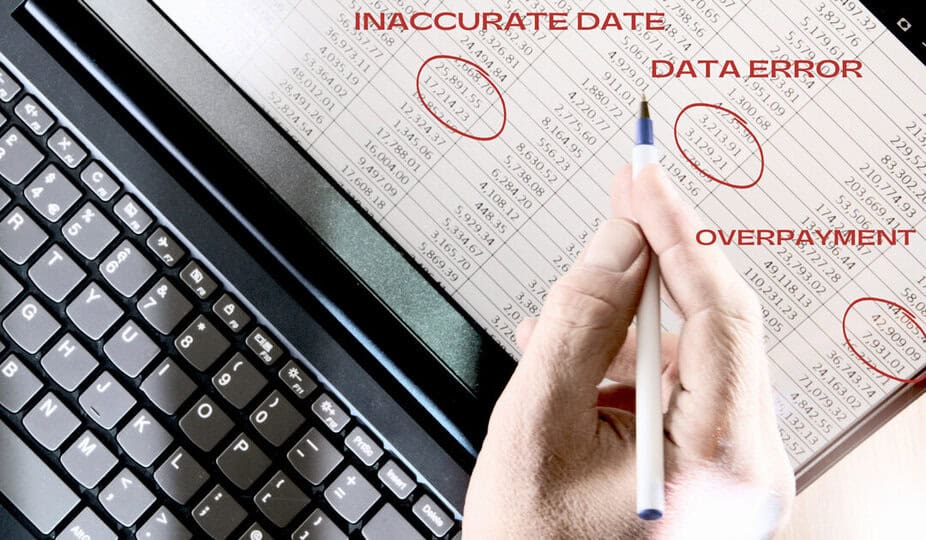
One of the most limiting features of using Excel or a similar spreadsheet solution for compensation management is found in its very structure and the way data must be manually added. The data that ends up in a spreadsheet is inherently susceptible to becoming inaccurate with one misplaced comma, fat-fingered character, or hastily applied formula. A one character error in one spreadsheet can quickly infiltrate any number of linked sheets and cause serious downstream consequences. Overpaying or underpaying employees, incorrect incentive payment calculations and other issues that result can seriously erode employee confidence, which in turn impacts morale and even retention.
Another limitation of using a home-grown spreadsheet solution to manage compensation happens when the person who built it decides to leave the company. There will be a long learning curve involved for any new HR professional that has to inspect each sheet line by line to understand how the sheet is set up, where it links and how outputs are affected. Not only does this place a lot of stress on your new hire, it also stands to impact the timeless of essential reports and even distribution of compensation, which is never well-received by employees who are expecting a paycheck or expense reimbursement on time.
Spreadsheets were never designed to be robust compensation management systems. They are only as accurate as the data being added to them and the competence of the human who is responsible for creating repeatable processes to ensure employees are paid fairly, on time and accurately.
A growing company can quickly start to accumulate an increasing number of spreadsheets to keep up with the volume of added benefits, incentives and regular payroll needs. Without a robust technology system in place to bring it all together, validate data points and automate processes, the time it takes to accurately manage compensation for employees becomes a vicious, unrelenting exercise in futility. The toll taken is apparent on not only your employees who become frustrated with unprofessional management of their important benefits and pay, but also on the team of people you have hired to administer them.
The Right Tool for the Job
 While Excel is a good short-term solution, using it on a long-term basis for compensation management and planning can create some unique business challenges that lead to decreased employee satisfaction, inability to recruit and retain top talent, and even financial losses caused by inaccuracies, inefficiencies or manual errors.
We like to think of it as having the right tool for the job. Imagine trying to build a house with a simple hammer and nails. While those tools may be sufficient to construct a small bird house, when it’s time to build a two-story office building, it is going to require a few more power tools. In this case, those power tools can be found in a robust, cloud-based compensation management system, like CompLogix.
Instilling a reliable and competent approach to managing your employees’ compensation goes a long way toward making sure all your employees are satisfied. With CompLogix, your staff will have time to focus on keeping your employees’s benefits well managed and compensation handled accurately and on time. That leaves more time for researching new incentive programs, locating and recruiting the best talent, and responding quicker to current employees’ questions or concerns.
Is Your Company at a Competitive Disadvantage?
Once your business has reached a certain size, keeping a spreadsheet-based compensation system can create a competitive disadvantage. Exposure to errors, compliance risks and reporting inconsistencies are inevitable as your business needs become more complex. Excel will not keep up. It wasn’t designed to keep up.
CompLogix’s configurable solutions help your team pinpoint errors before they happen, stay on top of industry salary trends, and allow for the kind of pay equity and transparency that today’s employees expect. Attracting new talent and keeping top performers depends on it. Excel simply cannot automate critical processes or provide the consistency needed to support your growing HR responsibilities around compensation management and planning.
Is it time for your organization to move beyond spreadsheets? It’s time to contact CompLogix.

Blog, General Insights
If you are responsible for managing the compensation and benefits for a company of any size, you are well aware of the impact a simple, misplaced decimal point may have. Formula errors in a spreadsheet or simple data entry mistakes can create hours of additional work and create negative downstream effects such as employee dissatisfaction and even attrition.
Even in this digital age, there are plenty of HR professionals who still use spreadsheets. A 2021 Oracle State of HR Analytics report finds as many as one-half fall into this category. For those still managing comp and benefits via spreadsheet, errors are inevitable – if it hasn’t happened yet – it really is just a matter of time.
Operational Risk and Manual Errors
The term operational risk is often used in the financial industry, but it applies to every business that stands to incur losses because of failed internal processes. Anytime there is a breakdown in the manual processes that handle employees’ compensation and benefits, some kind of loss will inevitably occur. In fact, current research finds nearly 90 percent of spreadsheets contain errors and one-half have material defects that impact the accuracy of the resulting data.
And those errors can really add up. Lost time is just a part of the loss equation that comes with having to correct manual spreadsheet errors. There can also be financial losses, for example those that result from inaccurate payroll or incentive program disbursements. Perhaps the biggest loss is in employees’ confidence in your HR Team and company to manage their pay and benefits appropriately. Once trust is lost, it is hard to earn it back. People do not appreciate having their pay or benefits poorly managed.
Manual Error, By the Numbers
If the cost of a SaaS-based compensation management solution is keeping you from ridding yourself of troublesome spreadsheets, the expense becomes much more reasonable when you consider the actual cost of spreadsheet errors.
Take for example a financial investment firm that relies on manual processes and spreadsheets to manage incentive payments for its investment bankers. According to Gartner, manual compensation processes result in errors between 3-8% of total incentive payouts and these inaccuracies can add up significantly over time. If this company pays out $4,000,000 in bonus compensation every year, they may be incurring costs from errors that range between $120,000 (3% error rate) and $320,000 (8% error rate). Additional costs of manual error are found in overpayment costs, administrative costs, attrition, and dispute costs.
Enable Your HR Team with a Configurable Solution
If you are considering a new compensation management system, you probably already understand its limitations. Imagine a world where your HR team doesn’t have to be bound to the constraints of multiple spreadsheets to manage compensation and benefits. Think about having reports available at a glance and the ability to flex and adjust your comp and benefits as offerings change and your company grows. Think about happier employees and getting to go home on time each night. It’s hard to put a price on that.
CompLogix’s Compensation Management Solution changes the way you manage your company’s pay programs — replacing complex manual methods with streamlined automation that saves time and resources. Because our solution is configurable, nearly everything from the type of pay program accommodated to the organization of data is customizable to your needs. And, it can work alongside your existing HR software. Contact us today for a complimentary demo.
Blog, General Insights
When you started in business, chances are your compensation management system consisted of a spreadsheet or small out-of-the-box solution. As your business grows (and that is the goal, afterall!) you may find yourself in a position where that spreadsheet is no longer manageable and that out-of-the-box solution just isn’t getting the job done.
Congratulations! This “problem” is a direct result of your solid business strategy and continued hard work. Now it’s time to embark on a better way to manage compensation and benefits for your company.
No Time for Status Quo
Limping along on the old manual methods is tempting, because change is “hard.” The truth is, the sooner you invest in a configurable system to manage compensation and benefits, the sooner you can focus on other ways to grow your business.
But, how will you really know if it’s the right time to invest in a SaaS-based compensation management solution?
There will be signs.
For most companies, there are plenty of signs that point to the need for a more robust compensation management solution. Some of these are obvious pain points, while others may be a little more subtle. Here are a few of the things we’ve found that indicate your business is ready for a next-level management solution:
- SO Many Spreadsheets. If your team is managing multiple spreadsheets for compensation and benefit information, and struggling to do so, this is sign number one.
- Time (Maybe Even Overtime). In addition to the difficulty of managing multiple spreadsheets, this does not take into account the time it takes to enter manual data, retrieve information, troubleshoot or respond to employee questions about their compensation and benefits. Creating and accessing reports can take days (or months!) and by the time you see them, may even be obsolete.
- Unhappy Staff. When you rely on manual processes for comp and benefits, your staff is engaged in a continuous cycle of always trying to catch up. They may be working many hours to attempt to do so and can quickly become unsatisfied with their roles. Unhappy employees are more likely to leave, which only adds to your HR staff workload.
- Mistakes. Manual entry and data errors just go together. It is reported that 88 percent of all spreadsheets have “significant” errors in them. Even the most meticulously created spreadsheets contain errors in 1 percent or more of all formula cells. A majority of errors reported were caused by human error—meaning they could have been completely avoidable. Errors are never good, but they are especially
egregious when it comes to the compensation and benefits your employees expect and deserve.
- One-Size-Fits All Isn’t Working. Home-grown or manual spreadsheet systems are a bear to change, but you are well aware that business growth requires change. Anytime you offer new or additional benefits, or implement a different insurance program, it requires reinventing the wheel to manage the resulting data. Or even more likely, you are living with a system that really isn’t configured to your specific needs and just trying to make it work. You don’t have to live this way!
If you recognize any of the signs mentioned above, you should at least begin a fact-finding mission to find a better solution. You don’t have to go it alone. Complogix provides compensation management software to help organize your HR comp and benefits data, getting sensitive and private data off of those spreadsheets and into an accessible system for easy management.
When you are ready to discuss your options, contact CompLogix. We are a small business with big solutions that can be configured to your business’ specific needs.
