Six compensation types. One plan year. And somehow each one has its own rules, its own timeline, and its own way of creating problems when you’re running it out of a spreadsheet.
If you manage merit, bonuses, equity, or anything in between, here’s what you’re actually dealing with.
Key Takeaways
Compensation types split into direct pay and indirect benefits.
Base salary anchors every other compensation decision your team makes.
Merit, bonus, STIP, and LTIP each carry distinct administrative complexity.
Off-cycle adjustments are the hardest compensation type to manage consistently.
Total rewards statements make the full value of employment visible to employees.
The Two Categories Most Compensation Types Fall Into
Compensation professionals typically divide pay into two categories: direct and indirect.
Direct compensation is cash or cash-equivalent pay: base salary, merit increases, bonuses, commissions, and equity. It shows up on a pay stub or a grant notice.
Indirect compensation covers the non-cash value employees receive through the employment relationship — health insurance, retirement contributions, paid time off, and similar benefits.
Direct compensation is what most compensation managers spend their cycle managing. Indirect compensation is what most employees chronically undervalue until a total rewards statement puts a dollar figure on it.
Compensation Types Compared
Here’s how the full set of compensation types breaks down across both categories.
Category
Type
Description
Direct
Base Salary
Fixed annual or hourly pay; the foundation of total cash compensation
Direct
Merit Increases
Performance-based salary adjustments, typically administered annually
Direct
Annual Bonus / STIP
Variable cash tied to individual, team, or company performance over one year or less
Direct
LTIP / Equity
Longer-horizon awards: stock options, RSUs, performance shares, or deferred cash
Direct
Commission
Sales-based variable pay tied to revenue or quota attainment
Indirect
Benefits
Health insurance, dental, vision, life insurance, disability coverage
Each type above carries its own administrative weight. Here’s what that looks like in practice, starting with the foundation.
1. Base Salary
Base salary is the fixed amount an employee receives for their work — expressed as an annual figure for exempt employees or an hourly rate for non-exempt workers. It is negotiated at hire and adjusted through merit cycles, promotions, or market corrections.
Everything else in direct compensation is built on top of it:
Merit increases are a percentage of base salary
Target bonus amounts are typically set as a percentage of base salary
Equity grant values are frequently benchmarked against base salary multiples
Benefits premiums and retirement matches are sometimes tied to base pay
A small error in how you position someone at hire can compound through every downstream compensation action for years. Base salary is foundational work, but it creates the conditions that make every other compensation type easier or harder to administer fairly.
2. Merit Increases
Merit increases are performance-based salary adjustments delivered once a year during a defined merit cycle. According to WorldatWork’s 2025–2026 Salary Budget Survey, U.S. organizations reported average salary increase budgets of 3.7% in 2025, down from 3.9% in 2024. That budget is finite, and distributing it fairly across hundreds of employees is where the real work lives.
A merit cycle is a workflow:
HR sets the budget and distributes allocations to managers
Managers review performance ratings and submit increase recommendations
Recommendations flow up through approval chains for review and sign-off
Final decisions route to payroll and get communicated to employees
In a spreadsheet environment, this process is fragile. Files get emailed back and forth. Managers overwrite formulas. Someone submits a version from two days ago. One incorrect range reference inflates a department’s budget by $40,000 and no one catches it until payroll runs.
3. Annual Bonuses and Short-Term Incentives (STIP)
A short-term incentive plan (STIP) rewards employees based on performance over one year or less. Annual bonuses are the most common form, with payouts typically tied to company, business unit, and individual goal attainment.
The distinction between a discretionary bonus and a formula-based STIP matters. Discretionary bonuses give managers latitude after the fact — flexible, but difficult to communicate and prone to perceived bias. Formula-based plans define target percentages, performance metrics, and payout curves in advance, making them more defensible and easier to explain.
STIP administration means managing eligibility rules, handling proration for mid-year hires or role changes, modeling payout scenarios before the budget is finalized, and building approval workflows that move awards from manager input to payroll without version control errors.
Plans that look simple on paper tend to surface a dozen edge cases per business unit by the time you actually run them. A dedicated compensation management platform handles the edge cases so your team doesn’t have to.
4. Long-Term Incentives (LTIP) and Equity Compensation
Long-term incentive plans reward performance and retention over a multi-year horizon, typically three to five years. Unlike annual bonuses, the reward only materializes if the employee stays and the company performs — which is precisely the point.
The most common equity vehicles:
Stock options — the right to buy shares at a fixed price after a vesting period
Restricted stock units (RSUs) — actual shares delivered upon vesting, no purchase required
Performance shares — grant amounts tied to achieving specific financial or operational milestones
Deferred cash — LTIP-style retention without equity dilution, common at private companies
Vesting schedules determine when employees receive their awards. Cliff vesting delivers the full award at the end of a defined period. Graded vesting releases portions incrementally — often 25% per year over four years — creating a stronger retention effect because something is always about to vest.
For executives, LTIPs frequently intersect with share ownership compliance requirements, where leadership must hold a minimum ownership stake. Tracking those thresholds and managing grant cycles across a leadership population adds a governance layer that quickly outgrows a spreadsheet.
5. Promotion-Based Pay Changes and Off-Cycle Adjustments
Every compensation type above assumes a planned cycle with known timelines. Promotions and off-cycle adjustments break that assumption — when a high performer gets a competing offer in October, when a market review identifies 15 engineers sitting 12% below band, when someone takes on expanded responsibilities mid-year.
These actions are harder to administer because they are exceptions. Someone has to pull the employee’s record, check their position in range, model the adjustment against budget, get approval, and push the change to payroll — often under time pressure and outside the normal HR calendar.
According to WorldatWork, 56% of organizations budget separately for promotional increases, while 44% absorb the cost from merit or other budgets. Organizations that struggle most are those without a consistent process for how off-cycle requests get evaluated, approved, and documented. That inconsistency is one of the more common contributors to unexplained pay disparities that surface in pay equity reviews.
6. Total Rewards: Seeing the Full Picture
Base salary is what employees see on their offer letter. Merit increases adjust it. Bonuses supplement it. Equity and LTIPs build on top of it. Benefits and retirement contributions surround it. The total is almost always larger than employees expect — often by a significant margin.
That CHRO’s team was paying people well. The problem was that nobody had ever shown employees what “well” added up to. A
total rewards statement pulls every compensation component into one personalized, employee-facing view — not a static PDF buried in an email, but a live document that reflects the latest approved decisions, benefits elections, retirement matching, and equity grant values.
When employees can see that their base salary, annual bonus, RSU grants, employer-paid benefits, and 401(k) match represent $130,000 in total investment rather than the $95,000 on their pay stub, the conversation about compensation changes entirely.
Frequently Asked Questions
What are the main types of compensation in HR?
The main types are base salary, merit increases, annual bonuses, short-term incentives (STIP), long-term incentives (LTIP) and equity, and indirect compensation through benefits and retirement. Most programs also include off-cycle adjustments for promotions and market corrections.
What is the difference between direct and indirect compensation?
Direct compensation is cash pay: salary, bonuses, commissions, and equity. Indirect compensation is non-cash value: health insurance, retirement contributions, paid leave, and perks. Both carry real cost to the employer, but indirect compensation is often invisible without a total rewards statement.
What is the difference between a STIP and an LTIP?
A STIP rewards performance over one year or less, typically as a cash bonus. An LTIP rewards performance and retention over three to five years, typically through equity or deferred cash. STIPs drive near-term results; LTIPs align employees with long-term growth.
How does merit pay differ from a bonus?
Merit pay is a permanent base salary increase. A bonus is a one-time payment that leaves base salary unchanged. A merit increase compounds — future increases, bonus targets, and equity grants are all calculated from the higher base. A bonus of the same amount does not.
What is included in a total rewards package?
A total rewards package includes base salary, variable pay, equity awards, employer-paid benefits, retirement contributions, paid time off, and other perks. Presenting it holistically makes the full value of employment visible — not just the number on a paycheck.
See How CompLogix Handles Every Compensation Type
Merit cycles, STIP plans, LTIP grants, promotion workflows, and off-cycle adjustments do not operate in isolation. They overlap, interact, and when one breaks down, it surfaces two cycles later as a pay gap or a retention problem.
CompLogix is built to hold that complexity — configurable business rules, manager-facing planning tools, real-time dashboards, and total rewards statements that communicate the full picture to employees. No spreadsheets. No version control errors. No $40,000 budget mistakes hiding in a formula.
Request a demo and see how the platform handles the compensation types your organization actually manages.
More than half of HR leaders cite spreadsheet complexity as a top pain point in compensation planning. For long-term incentives, that problem intensifies because you’re projecting costs across multiple years and performance scenarios.
A long-term incentive plan calculator converts plan rules into projected payouts and budgets without the formula maintenance.
Compensation teams can model scenarios in minutes, and managers get clear guidance on award ranges instead of confusing spreadsheets they can’t interpret.
Key Takeaways
LTI calculators simplify projections, budgets, and employee awards.
Scenario modeling instantly reveals the financial impacts of design changes.
Manager-friendly worksheets improve incentive communication and consistency.
LTI calculators reduce spreadsheet errors and save compensation teams time.
Long-Term Incentive Plan Calculator
Turning incentive policies into real numbers can be challenging. This calculator simplifies the process by showing how salary, targets, and performance interact to determine payouts.
Use it to validate plan designs, explore scenarios, and help managers understand award ranges at a glance.
Long term incentive plan calculator
Model projected cash based long term incentive payouts using salary, target award, performance results, and guardrails.
Employee inputs
$
percent
percent
percent
Tip: Individual modifier can represent performance rating or discretionary adjustment.
Plan assumptions
percent
Optional performance curve
If you want a simple threshold target max curve, enable it below. The calculator will convert your performance percent into a payout factor.
Budget check
Use this to sanity check a manager budget envelope. It multiplies the calculated per employee payout by a headcount estimate.
$
Results
Target award
$0
Before performance
Performance factor used
1.00
After curve if enabled
Projected payout
$0
Includes proration and modifier
Capped payout
$0
After guardrails
Explain it
Eligible
Budget check
Estimated total:$0
Budget envelope:$0
How Long-Term Incentive Payouts Are Calculated
Long-term incentive payouts can feel complicated, but they’re based on a straightforward formula. Complexity arises when performance results, partial-year adjustments, and budget limits come into play.
Here’s how most cash-based long-term incentive plans calculate payouts:
Step 1: Target Award
Base Salary × Target Award Percentage
Step 2: Performance-Adjusted Award
Target Award × Company Performance Factor
Step 3: Final Projected Payout
Performance-Adjusted Award × Proration × Individual Modifier
Step 4: Capped Payout
Final Projected Payout (limited by maximum caps, if applicable)
Expressed as a single formula:
Long-Term Incentive Payout =
Base Salary × Target Percentage × Performance Factor × Proration × Individual Modifier, with maximum payout caps applied afterward.
Each piece serves a clear purpose:
Base salary sets the baseline tied to an employee’s role and responsibility.
Target percentage reflects the intended incentive based on job level.
Performance factor aligns the payout directly to business outcomes.
Proration adjusts awards for partial-year eligibility.
Individual modifiers account for personal performance or special adjustments.
Caps ensure budget control and maintain fairness.
The calculator above handles these details automatically, freeing you to focus on planning and decision-making rather than spreadsheet formulas.
The Data That Powers an LTI Calculator
Every effective calculator starts with clean, reliable data. The inputs you need fall into a few core categories that compensation teams will recognize from other planning work.
Employee data forms the foundation.
This includes job titles, levels, department assignments, base salary, and work location. Most organizations pull this directly from their HRIS, which means data quality in your source system matters.
If your job architecture is inconsistent or your salary data is outdated, those problems will carry through to your LTI projections.
Eligibility rules determine who participates in the plan.
Some organizations limit long-term incentives to executives, while others extend them to managers or key individual contributors. Your calculator needs to filter employees based on criteria like job level, tenure, performance rating, or a combination of factors.
Target award levels translate plan design into individual values.
Common approaches include setting targets as a percentage of base salary, a multiple of annual bonus, or a fixed value tied to job level.
For senior executives at large companies, targets often range from 80 to 150 percent of base pay. For broader populations, targets are typically lower but still meaningful as a retention tool.
Performance metrics and curves connect business outcomes to award payouts.
About 90 percent of companies with LTI plans tie at least a portion of awards to financial metrics like revenue growth, profitability, or return on capital.
Your calculator should allow you to model different performance scenarios, from threshold to target to maximum, so you can see how total cost moves when results vary.
Budget constraints keep the program affordable. Finance teams typically set an overall envelope for variable pay and long-term incentives as a percentage of payroll.
Your calculator should track spending against these limits at the company, division, and manager level so you can catch budget overages before approvals go out.
How Scenario Modeling Works
The real value of an LTI calculator emerges when leadership asks questions like “What if we hit 120 percent of plan?” or “What happens if we extend this program to another 50 employees?”
Scenario modeling lets you change assumptions and see results immediately.
Run a baseline scenario using expected performance, then test best-case and worst-case outcomes. The output shows total cost under each scenario, giving finance and HR leaders what they need to plan accruals and set expectations with the executive team.
You can also test design changes before committing.
Want to see what happens if you raise targets for a specific job family or shift the performance curve so payouts increase more steeply above target?
A dedicated tool delivers answers in minutes.
For pay equity analysis, scenario modeling becomes particularly valuable. Test whether proposed LTI targets create disparities across comparable roles or demographic groups, then build targeted adjustment budgets before the program launches.
Enabling Managers Without Finance Degrees
When managers can’t articulate the reasoning behind an award, its motivational impact weakens. Calculator tools address this by generating manager worksheets that simplify the entire process.
Instead of complex formulas, these worksheets show each team member’s target award, the permissible range based on performance and budget, and how that award fits into total compensation. Managers see what they need to make decisions and have informed conversations with their teams.
Built-in guardrails handle the rest. Minimum and maximum caps, required approvals for exceptions, and real-time budget indicators help managers stay within policy without needing to understand the underlying calculations.
Where LTI Calculators Fit in Your Tech Stack
A compensation management platform with LTI calculator capabilities sits at the planning layer. It connects upstream to your HRIS for employee data and to market surveys for competitive benchmarking. It connects downstream to payroll and finance for payment processing.
You can model unit values, estimate future payouts under different growth scenarios, and show employees the potential value through total rewards statements. Actual payments flow to payroll once awards vest and amounts are finalized.
This planning-layer focus means you can run sophisticated LTI programs without building full equity administration infrastructure. Private companies and mid-market organizations increasingly use this approach to offer ownership-style incentives without the complexity of managing actual shares.
Moving Beyond Spreadsheets
The shift from spreadsheets to a dedicated calculator changes how compensation teams spend their time. Instead of consolidating workbooks and validating formulas before every leadership meeting, they focus on program design and employee communication.
A purpose-built tool also creates documentation that spreadsheets can’t match. When someone asks why an award was set at a particular level, you trace the answer through recorded assumptions and approval workflows rather than hunting through file versions.
That audit trail matters when governance reviews or pay equity analyses require clear rationale for every decision.
Long-term incentive programs succeed when they drive the retention and performance outcomes you designed them for. The calculator is just the mechanism that gets you from plan design to execution without losing accuracy along the way.
A well-structured pay equity analysis spreadsheet helps HR teams quickly identify hidden compensation gaps across demographics, roles, and departments.
Rather than relying on generic salary tracking, specialized templates with built-in tabs and formulas can simplify your pay equity review process.
In this post, we share several reliable sources where you can download templates designed to streamline data organization, ensure accuracy, and support compliance.
Key Takeaways
Pay equity spreadsheets reveal hidden compensation gaps using structured data.
Essential spreadsheet tabs include raw data, standardized records, and calculations.
Effective templates include clear documentation and built-in data validation rules.
Choose templates that align closely with your existing HR system data.
What to Look For in a Pay Equity Spreadsheet
When evaluating pay equity spreadsheets, focus on features that simplify your analysis and ensure accuracy. Here’s a quick checklist of key elements to look for:
Structured Tabs: Separate tabs for raw data imports, standardized employee records, and summary calculations.
Essential Columns: Clearly labeled columns for base pay, variable compensation, job level, department, location, hire date, and demographic data.
Built-In Calculations: Formulas for calculating compa ratios (salary compared to range midpoint), demographic group averages, and variance analysis to identify statistical outliers.
Data Validation: Built-in rules or conditional formatting to quickly identify and resolve data quality issues.
Clear Documentation: A dedicated data dictionary tab that clearly defines each field, including data sources and accepted values, ensuring consistency and aiding audits.
Choosing a spreadsheet with these features helps streamline your pay equity analysis process and supports ongoing compliance efforts.
Where to Download Pay Equity Spreadsheet Templates
Once you know what you are looking for, you can choose from several reputable starting points. Most of these resources are free, although some ask for an email address before download.
HiBob offers a free pay equity audit template that includes pre-built fields for common HR data points and basic summary views. In my experience, it works best for organizations under about 500 employees that want a quick baseline view before investing more time.
Before you use it, confirm that the demographic categories and job fields reflect your own practices and local law. You may need to add or hide some fields to stay consistent with your internal data model.
The Acterys pay equity template leans more into analytics. It is designed to connect with tools such as Power BI, so it can be a good fit if your HR or analytics team is already comfortable with that ecosystem.
Check that the embedded formulas align with your compensation philosophy. For example, if you use different pay ranges by geography, make sure the template captures those differentials correctly.
The Rhode Island Department of Labor and Training publishes a pay equity spreadsheet that includes detailed job classification and pay difference calculations. Even if you do not operate in Rhode Island, this file is useful as a compliance reference.
The structure reflects how regulators expect employers to document job groupings and pay comparisons. You can borrow that structure and adapt it to your own state or country.
4. State or regional toolkits such as LEEP
Some states and organizations provide broader pay equity toolkits that include spreadsheets. For example, the Leaders for Equity and Equal Pay toolkit is aimed at small to mid-size employers and combines a step-by-step guide with downloadable worksheets.
These resources are particularly helpful if you are formalizing your process for the first time and need both a template and narrative guidance.
5. Vendor and HR education guides from Factorial and AIHR
Platforms like Factorial and AIHR publish detailed pay equity audit guides that walk through spreadsheet structure and analysis steps.
They may not always offer a one-click download, but they provide field-by-field guidance you can adapt to your existing Excel or Google Sheets workbook.
If your legal team prefers a custom template, these guides are a good way to confirm you have captured the right columns and calculations.
How to Use a Pay Equity Analysis Spreadsheet Effectively
Once you have chosen a template, the real work starts. Below is a simple way to use a pay equity spreadsheet for an initial review, based on what many compensation teams do in their first cycle.
1. Align fields with your HR systems
Start by mapping each column in the template to data fields in your HRIS, payroll, and performance systems. Adjust labels and add helper columns if needed so you can import data without extensive manual edits every time.
2. Import and clean your data
Export a current snapshot of employee data from your HRIS and paste or import it into the raw data tab. Use the template’s validation rules and conditional formatting to find obvious issues such as missing salaries, duplicate employees, or inconsistent job titles.
3. Standardize jobs and comparison groups
On the standardized records tab, group employees into comparable roles. Many teams create a comparison group column that combines job family, level, and location.
This step is critical. If groups are too broad, your analysis will be noisy. If they are too narrow, you will not have enough employees per group.
4. Run basic equity checks
With groups defined, use the built-in formulas and pivots to look for patterns. Common first questions include:
Are average compa ratios lower for a particular demographic group within the same job level
Do any departments show consistent gaps by gender or race or ethnicity
How many employees fall below a defined threshold such as 90 percent compa ratio
At this stage, you are looking for signals, not yet making individual pay decisions.
5. Document findings and next steps
Use the documentation tab or a separate summary to capture which data you used, any limitations, and key findings. For many organizations, this becomes the starting point for building equity adjustment budgets in the next merit cycle.
When Spreadsheets Aren’t Enough
Spreadsheets are a practical way to run early-stage pay equity reviews, especially if you are working with a few hundred employees and a relatively simple structure.
As your organization grows, the limitations become clear. You spend more time managing file versions, updating formulas, and reconciling data than interpreting results.
At that point, many teams move equity analysis into a broader compensation planning platform. A tool like CompLogix can centralize market data, salary ranges, and demographic information, then apply equity checks alongside your merit and promotion planning.
Instead of passing spreadsheets around, managers and HR leadership can see potential gaps and proposed adjustments in one place and keep an audit trail for future reviews.
Even if you plan to implement a platform, starting with a solid pay equity analysis spreadsheet helps you clarify your comparison groups, data sources, and reporting needs so that any future system setup reflects how you actually run reviews.
Frequently Asked Questions
What data do I need to run a basic pay equity analysis in a spreadsheet?
You need employee base pay, variable pay if applicable, job title and level, department, location, hire date, and demographic fields used for analysis, such as gender and race or ethnicity. Add salary ranges to calculate compa ratio and range penetration.
Are free pay equity templates enough for compliance?
Sometimes. Free templates can help document a consistent process, but compliance rules vary by location. Confirm required fields, grouping methods, and documentation standards with legal or HR compliance partners before relying on a template for regulatory reporting.
Can I use Google Sheets instead of Excel?
Yes. Google Sheets works for most pay equity templates, especially for smaller datasets and collaboration. Excel is often better for large files, complex pivot tables, and heavier calculations, but the core structure and formulas translate well.
How often should we refresh our pay equity spreadsheet?
Run a full pay equity review at least annually, often alongside the merit cycle. Refresh sooner after major events like reorganizations, acquisitions, large market adjustments, or new pay ranges. More automated data imports make more frequent checks practical.
When should we move from spreadsheets to a compensation platform?
Move beyond spreadsheets when you have version control issues, frequent formula errors, limited auditability, or need managers to see equity impacts during planning. Platforms are typically more sustainable for larger workforces and for linking equity analysis to budgets, approvals, and cycle management.
Compensation management has become one of the most complex challenges facing HR teams today.
With pay transparency laws expanding across the US and EU, and employees expecting more precise explanations of how their pay is determined, getting compensation right matters more than ever.
Here are the best practices I’ve seen work across dozens of organizations.
1. Build a Job Architecture Before You Touch Salary Bands
Every compensation decision you make will be easier if you start with a solid job architecture. This means creating a framework of job levels, families, and career paths that organizes roles consistently across your organization.
I learned this the hard way early in my career. We spent months building salary ranges without a clear leveling system, and managers immediately started arguing about why their senior analyst should be paid more than another department’s senior analyst. The titles matched, but the responsibilities didn’t.
A well-designed job architecture defines what separates a Level 3 from a Level 4, regardless of department. It establishes criteria like scope of impact, decision-making authority, and required expertise.
When you have this foundation, pay conversations shift from “why does Sarah make more than me?” to “what do I need to demonstrate to reach the next level?”
2. Align Your Pay Philosophy With Business Strategy
Your compensation philosophy should answer a fundamental question: “how do we want to position ourselves in the talent market?”
Some organizations lead the market to attract top performers. Others match market rates and compete on culture or flexibility. Neither approach is wrong, but trying to do both inconsistently creates problems.
Document your philosophy in plain language that managers can explain to their teams. Include decisions like:
whether you pay at the 50th or 75th percentile
how you handle geographic pay differences
what role equity compensation plays
When I work with compensation teams, they’ve made these decisions informally over the years but never written them down. That institutional knowledge walks out the door when someone leaves.
Review your philosophy annually. Market conditions shift, and a strategy that worked three years ago might not serve your current hiring goals.
Relying on a single salary survey is a recipe for blind spots. Different surveys use different methodologies, sample companies of different sizes, and update at various frequencies. The compensation analyst who triangulates three or four sources will produce more defensible recommendations than one who pulls a single number.
Blend traditional survey data with real-time sources like job posting aggregators and compensation platforms. Pay attention to which surveys best represent your industry and geography. A tech company in Austin and a manufacturing firm in Ohio shouldn’t weigh the same data sources equally.
One caution here: don’t let the data override common sense. I’ve seen teams refuse to adjust an offer because “the survey says 85th percentile is our ceiling,” only to lose a candidate they desperately needed. Surveys describe the market. They don’t dictate your decisions.
4. Prepare for Pay Transparency Now, Not Later
Pay transparency legislation is accelerating faster than most HR teams expected.
Start by auditing your current state. Can you explain why two people in the same role earn different amounts? If the answer involves factors like “she negotiated harder” or “he’s been here longer,” you have work to do. Legitimate pay differences should tie to performance, skills, experience, or location, and you should be able to document them.
Create salary ranges for every role, even if your jurisdiction doesn’t require disclosure yet. The exercise itself reveals inconsistencies you’ll want to address before employees start asking questions.
5. Run Pay Equity Analyses Regularly
Pay equity isn’t a one-time project. Gaps creep back in through hiring decisions, merit cycles, and promotions. Organizations committed to fair pay run statistical analyses at least annually, and many do so before every merit cycle.
The analysis should look beyond simple averages. A proper pay equity review uses regression analysis to control for legitimate factors like tenure, performance, and job level, then identifies unexplained gaps by gender, race, and other protected characteristics.
When you find gaps, have a remediation plan ready. Some organizations set aside a budget specifically for equity adjustments, separate from merit increases. Others address gaps over multiple cycles to manage cost.
Either approach works, but hoping the problem resolves itself doesn’t.
6. Train Managers to Have Compensation Conversations
Your compensation strategy is only as good as the managers explaining it to employees. Most managers receive zero training on how to discuss pay, leaving them to improvise during uncomfortable conversations.
Equip managers with clear talking points about your pay philosophy, how ranges work, and what drives movement within a range. Role-play common scenarios: the employee who believes they’re underpaid, the top performer expecting a larger increase, and the new hire who negotiated higher than existing team members.
The goal isn’t to script every conversation. It’s to give managers confidence that they understand the system well enough to explain it honestly.
When managers stumble through compensation discussions, employees lose trust in the process, even if the underlying decisions are fair.
7. Document Everything
Compensation decisions have legal implications. If someone files a discrimination claim two years from now, you’ll need to explain why you made the choices you did. Memory won’t be enough.
For every pay decision, capture the rationale.
Why did this new hire come in at the 60th percentile instead of the 50th?
What performance factors drove this merit increase?
Why was this employee’s promotion adjustment larger than their peers’?
Good documentation also makes your own job easier. When you’re building next year’s merit budget, you’ll be grateful for records showing how last year’s decisions played out.
8. Balance Automation With Human Judgment
Compensation analytics tools have become remarkably sophisticated – one of the most notable trends we’ve seen in this type of software.
AI can flag pay equity issues, generate salary recommendations, and model the impact of different budget scenarios. These capabilities save time and surface insights humans might miss.
But compensation decisions affect people’s livelihoods, and people deserve more than an algorithm’s output. Use technology to inform decisions, not make them.
The platform might recommend a 3% increase based on compa ratio and performance rating. Still, the compensation professional should consider context the system can’t see: the employee’s flight risk, an upcoming role expansion, or market conditions for that specific skill set.
The organizations that get this balance right treat AI recommendations as starting points and apply human expertise to the final call. They’re faster and more consistent than pure manual processes, but they haven’t removed judgment from the equation.
Compensation platforms like CompLogix help HR teams work faster and more accurately. They identify pay equity concerns, suggest salary changes, and model budgets using real-time data.
Moving Forward
Compensation management will only grow more complex as transparency expectations rise and talent competition intensifies. The practices above won’t solve every challenge, but they’ll give you a foundation to build on.
Start with the areas where you have the most significant gaps. If your job architecture is solid but managers can’t explain pay decisions, focus there. If you’re confident in your communication but haven’t run a pay equity analysis in two years, that’s your priority.
Minor improvements add up. When you pair a thoughtful strategy with a flexible tool like CompLogix, you build a compensation practice that grows with your business.
Your CEO just asked why two engineers with identical titles earn $30,000 apart. You have 48 hours to explain the gap and propose a fix.
I’ve been in that room. The silence is uncomfortable, and the scramble to pull data from six different spreadsheets makes it worse. A structured compensation review would have surfaced that discrepancy months earlier, with documentation to back up the decision.
This guide walks you through the exact process I use to run comp reviews that hold up under scrutiny – with or without a platform like CompLogix.
Let’s start with what a compensation review actually involves.
Key Takeaways
Compensation reviews align pay with performance, equity, and market benchmarks.
Structured reviews reduce legal risk and support transparent pay conversations.
Clean data and audit trails help justify decisions and prevent last-minute chaos.
Platforms like CompLogix automate reviews, budgets, and approval workflows.
What Is a Compensation Review?
A compensation review is a structured evaluation of employee pay against internal equity, market benchmarks, and budget constraints, typically conducted annually or during major business shifts.
It is not the same as an ad-hoc raise or a promotion bump. Those are point decisions. A comp review is a system-wide assessment that produces approved salary adjustments, updated pay ranges, and a documented rationale for every change.
The inputs are straightforward: current salaries, job levels, tenure, performance ratings, and market survey data.
The outputs matter more. You walk away with a defensible record of how pay decisions were made, who approved them, and why.
Seasoned compensation professionals separate “structure updates” from “budget reality.” Ranges might need to move 8% to stay competitive, but your budget only supports 4% in actual increases.
Treating those as the same conversation creates confusion. Keeping them distinct gives you clearer messaging for managers and employees.
Understanding the definition is one thing. Building a repeatable process is another.
Why a Structured Compensation Review Matters
A documented compensation review protects your organization from pay equity lawsuits, reduces regrettable turnover, and gives managers defensible talking points when employees push back on their number.
Unstructured reviews, where managers make isolated decisions without visibility into the broader picture, widen those gaps over time. One quarter of discretionary raises here, another there, and suddenly you have a pattern that is difficult to explain and expensive to fix.
The upside is equally tangible.
Organizations that prioritize pay equity are 1.6 times more likely to meet or exceed their financial targets, per Trusaic research. That correlation makes sense. Fair pay reduces turnover, and replacing an employee costs anywhere from 50% to 200% of their annual salary, depending on the role.
Employee trust is the third lever.
HR practitioners on Reddit’s r/humanresources describe a familiar pattern: employees push back hard when told their pay is “already at or above market” without seeing the data. A formal review process, with clear ranges and documented decisions, turns a defensive conversation into a transparent one.
Compliance pressure is accelerating too. The Office of Personnel Management proposed limits on salary history use in 2023, and more states now require employers to post salary ranges in job ads. The documentation habits you build during a comp review directly translate into audit readiness.
Even a tight process can stumble without the proper steps. Here is the framework I follow.
Core Steps in the Compensation Review Process
The following seven steps work whether you are running your first formal review or tightening an existing process. I have used this sequence at companies ranging from 80 employees to over 1,500, adjusting the tooling but keeping the logic consistent.
1. Set Objectives and Timeline
Define what you are solving before you touch a spreadsheet. Are you correcting market misalignment, addressing equity gaps, rewarding performance, or all three? Lock calendar dates for the data freeze, manager input window, approval routing, and employee communication. Ambiguity here creates chaos downstream.
2. Gather and Clean Data
Pull current salaries, job levels, tenure, performance ratings, and demographics into a single source – ideally via an integrated system like CompLogix that reduces manual errors.
Flag missing or inconsistent records before analysis begins. I once ran a review where 14% of employees had no job level assigned. That gap took two weeks to fix, delaying the entire cycle.
3. Benchmark Against the Market
Use structured survey data from providers like Mercer, Radford, or Comptryx rather than scraping job boards.
Ad-hoc searches miss the nuance of leveling and geographic adjustments. Align your internal titles with survey matches, and document every mapping decision so future reviews remain consistent.
4. Analyze Internal Equity
Calculate compa-ratios for every employee. Anyone below 80% of their range midpoint or above 120% deserves a closer look.
Segment by department, tenure, and demographic to surface pay compression or equity gaps. This step is where patterns emerge that individual managers cannot see.
5. Build Budget Scenarios
Model multiple options: a 3% pool versus a 5% pool, merit-only versus merit-plus-equity adjustments. Present the trade-offs to finance and leadership before locking in numbers. Showing options builds buy-in and avoids the last-minute scramble when someone asks “what if we had more budget?”
6. Route for Approval
Define exception thresholds upfront. Increases above 10% require VP sign-off. Out-of-cycle adjustments may require co-approval from HR and finance.
Use a workflow tool or a shared tracker to log each approval and its rationale. This audit trail matters more than most teams realize until they need it.
7. Communicate to Managers and Employees
Train managers on talking points before they have compensation conversations. Anticipate the “why not more?” question and give them language to address it.
Provide employees with context on how decisions were made, not just the final number. Transparency does not mean sharing everyone’s salary. It means explaining the process.
With the steps defined, the next question is timing.
Choosing a Review Cadence and Governance Model
Most organizations run compensation reviews annually, timed to the fiscal year or performance cycle. That cadence works well for stable environments, but it can feel slow when you are competing for talent in a hot market.
Cadence
Best For
Trade-off
Annual
Predictable budgeting, mature orgs
Slow response to market shifts
Biannual
High-growth, competitive hiring
More administrative overhead
Quarterly spot reviews
Post-M&A integration, retention crises
Risk of “always in review” fatigue
We switched from annual to biannual after losing three engineers in Q3 to faster-moving competitors. The extra cycle added work, but the retention improvement justified it within two quarters.
Governance is the other half of the equation. Clarify who owns salary ranges (usually Total Rewards), who owns budget (Finance), and who approves exceptions (often HRBP and the relevant VP together).
Document every exception with a rationale. That log becomes your defense if anyone questions a decision later.
With cadence set, watch for these common pitfalls.
Tools That Support the Process
Compensation platforms like CompLogix, Lattice, and Workleap centralize salary ranges, budgets, and approval workflows in one place. They replace the spreadsheet sprawl that causes version-control headaches and manual errors.
The better platforms integrate directly with your HRIS, pulling employee data automatically and reducing the data-gathering phase from weeks to days. Some include rule engines that flag out-of-range proposals or pay compression in real time, catching issues before they reach the approval stage.
Workleap, for example, embeds Mercer-powered benchmarks directly into its compensation planning module. That integration removes the manual step of matching titles to survey data, though you still need human judgment to validate the matches.
One constraint to keep in mind: sensitive salary data limits what you can move to generic productivity tools.
Many teams restrict exports to approved compensation platforms or locked spreadsheets for privacy and compliance reasons. Check with legal before dropping salary files into a shared drive.
Let’s wrap with a quick recap and next steps.
Final Thoughts
A structured compensation review aligns pay with market data, internal equity, and budget constraints while giving managers the context they need to have honest conversations. The process does not have to be complicated, but it must be documented.
Getting this right matters beyond compliance. It shapes whether employees trust that their contributions are valued fairly. That trust is difficult to rebuild once it erodes.
Start this week by running a data audit. Pull your current employee file and flag any missing job levels, outdated titles, or inconsistent salary records. Then map your existing process against the seven steps above. The gaps will tell you where to focus first.
Pay transparency expectations are rising. The organizations that build rigorous review habits now will have a significant advantage when those expectations become requirements.
In the fast-evolving landscape of human resource management, automation has become a cornerstone for efficiency and accuracy. One area where automation has had a profound impact is in compensation management.
While the primary benefits of automated compensation management systems, such as improved accuracy and time savings, are well-documented, there are several unexpected advantages that organizations may discover after implementation. Here are some of the surprising benefits of adopting automated compensation management.
Enhanced Employee Engagement and Retention While it might be obvious that fair compensation contributes to employee satisfaction, the role of automated systems in this process is often underappreciated. Automated compensation management ensures timely and accurate compensation adjustments based on performance metrics and market data. This reliability can significantly boost employee trust and morale, leading to higher engagement and reduced turnover. Employees are more likely to stay with an organization that consistently recognizes and rewards their contributions accurately and fairly.
Reduced Bias and Increased Fairness One of the less obvious benefits of automated compensation management is the reduction of unconscious bias. Manual compensation processes are susceptible to various biases that can affect pay equity. Automation standardizes the criteria for salary adjustments, bonuses, and promotions, ensuring that compensation decisions are based on objective data rather than subjective judgments. This leads to a fairer and more equitable workplace, enhancing the organization’s reputation and culture.
Improved Compliance and Risk Management Compliance with labor laws and regulations regarding employee compensation can be complex and time-consuming. Automated compensation management systems are designed to stay updated with the latest legal requirements and industry standards. They help ensure that all compensation practices adhere to these regulations, reducing the risk of non-compliance and potential legal issues. This proactive approach not only mitigates risk but also builds a strong foundation of trust with employees and regulators alike.
Enhanced Strategic Planning With automation, the wealth of data collected and analyzed by compensation management systems can provide deep insights into compensation trends, employee performance, and budget allocation. This data-driven approach enables HR and management teams to make informed strategic decisions regarding workforce planning, budget forecasting, and talent management. The ability to visualize compensation data in real-time supports more effective planning and resource allocation.
Greater Employee Self-Service Automated compensation systems often come with self-service portals where employees can access their compensation details, performance metrics, and career progression information. This transparency empowers employees to take charge of their career development and understand how their efforts translate into compensation. It also reduces the administrative burden on HR teams, allowing them to focus on more strategic initiatives.
Boosted Productivity Through Efficiency The automation of compensation management reduces the administrative workload associated with manual processes, freeing up valuable time for HR professionals. This increased efficiency means that HR teams can redirect their efforts toward more strategic and impactful activities, such as employee development programs, talent acquisition, and organizational development. The ripple effect of this efficiency boost can be seen in overall organizational productivity.
Improved Employer Branding A transparent and fair compensation system is a key component of a positive employer brand. When employees know that their compensation is managed through a reliable and unbiased system, they are more likely to share positive feedback about the organization. This can enhance the company’s reputation in the job market, making it more attractive to top talent. An organization known for fair and efficient compensation practices gains a competitive edge in talent acquisition.
Fostering a Culture of Accountability and Performance Automated compensation management systems often integrate performance management tools, linking compensation directly to performance outcomes. This fosters a culture of accountability where employees understand that their compensation is tied to their contributions and results. It motivates employees to strive for higher performance, knowing that their efforts will be recognized and rewarded in a structured manner.
The adoption of automated compensation management systems offers more than just streamlined processes and error reduction. It brings a host of unexpected benefits that can transform an organization’s culture, enhance employee satisfaction, and boost overall productivity. By reducing bias, ensuring compliance, providing strategic insights, and fostering a culture of transparency and accountability, these systems play a crucial role in building a fair, engaging, and high-performing workplace.
As organizations continue to navigate the complexities of modern workforce management, embracing automation in compensation management is not just a step toward efficiency, but a strategic move toward long-term success. Are you ready to learn more? Contact CompLogix
In today’s complex business environment, maintaining compliance in compensation management is more critical than ever. Compliance ensures that organizations adhere to legal standards and ethical practices while managing employee compensation. Failing to comply can lead to severe consequences, including legal penalties, financial losses, and reputational damage. Here’s why compliance in compensation management is essential.
Legal and Regulatory Adherence
Compliance with local, state, and federal laws is a fundamental aspect of compensation management. Laws such as the Fair Labor Standards Act (FLSA) in the United States set standards for minimum wage, overtime pay, and recordkeeping. Ensuring that compensation practices adhere to these regulations helps prevent legal disputes and penalties. Moreover, staying updated with changes in legislation, such as amendments to wage and hour laws, is crucial to maintaining compliance (Serchen).
Avoiding Financial Penalties
Non-compliance with compensation laws can result in hefty fines and back pay awards. For example, failing to pay overtime correctly or misclassifying employees can lead to substantial financial liabilities. Companies that do not comply with tax regulations regarding employee compensation may also face penalties from tax authorities. By ensuring compliance, organizations protect themselves from these costly repercussions.
Promoting Fairness and Equity
Compliance in compensation management also means promoting fairness and equity within the organization. This involves implementing equal pay for equal work, adhering to anti-discrimination laws, and ensuring that all compensation practices are free from bias. This not only helps in avoiding legal issues but also fosters a positive workplace culture. Employees are more likely to feel valued and fairly treated, leading to higher job satisfaction and retention.
Enhancing Reputation and Trust
A company known for its compliance with compensation laws builds a strong reputation for ethical business practices. This reputation can be a significant competitive advantage in attracting top talent and retaining employees. Furthermore, it fosters trust among stakeholders, including employees, investors, and customers, who are increasingly concerned about corporate governance and ethical practices.
Accurate Reporting and Transparency
Compliance ensures accurate reporting of compensation data. This transparency is critical for internal audits, external reviews, and financial reporting. Accurate data helps in making informed business decisions and maintaining stakeholder trust. It also facilitates transparency with employees regarding how their compensation is calculated and ensures that any adjustments or bonuses are clearly communicated and justified.
Risk Management
Effective compliance strategies in compensation management help mitigate various risks. These include legal risks associated with non-compliance, financial risks from potential penalties, and operational risks that can arise from disruptions caused by non-compliance issues. By proactively managing compliance, organizations can avoid these risks and ensure smooth operational continuity.
Implementing Compliance in Compensation Management
To achieve compliance in compensation management, organizations should adopt a proactive approach:
Regular Audits and Reviews: Conduct regular audits of compensation practices to ensure they align with current laws and regulations. This helps identify and rectify potential issues before they escalate.
Training and Education: Provide ongoing training for HR professionals and managers on compensation laws and best practices. This ensures that everyone involved in compensation decisions is informed and compliant.
Use of Technology: Implement compensation management software that includes compliance features. These tools can automate calculations, ensure accurate record-keeping, and provide alerts for regulatory changes.
Policy Development: Develop and maintain clear policies and procedures regarding compensation. Ensure these policies are communicated to all employees and consistently applied across the organization.
Consulting Experts: Engage legal and compliance experts to stay updated on regulatory changes and to audit compensation practices periodically.
Compliance in compensation management is not just a legal obligation but a strategic necessity. It ensures legal and regulatory adherence, promotes fairness, enhances reputation, and mitigates risks. By prioritizing compliance, organizations can create a transparent, fair, and legally sound compensation structure that supports their long-term success and fosters a positive organizational culture.
Complogix is ready to help bring compliance and security to your organization’s compensation management processes. Contact CompLogix for a no-obligation discussion today!
Selecting the right compensation management software is a vital decision for any organization. Among the many features to consider, integration capabilities stand out as particularly critical. Here’s why having robust integration capabilities in your compensation management software is essential for maximizing efficiency, accuracy, and strategic value.
Streamlined Data Flow and Accuracy
One of the primary benefits of integration capabilities is the seamless flow of data between systems. When your compensation management software integrates well with existing HR, payroll, and financial systems, it eliminates the need for manual data entry. This not only saves time but also significantly reduces the risk of errors. Integrated systems ensure that employee data such as job roles, performance metrics, and salary information are consistent and up-to-date across all platforms.
Enhanced Reporting and Analytics
Integration capabilities enhance the software’s reporting and analytical functions. By pulling data from multiple sources, compensation management software can provide comprehensive insights into compensation trends, equity, and budget alignment. These insights are crucial for strategic decision-making. Integrated systems can generate reports that combine HR data with financial metrics, giving a holistic view of the company’s compensation landscape.
Improved Compliance and Risk Management
Keeping up with regulatory requirements is a complex but necessary task for any business. Integrated compensation management systems help ensure compliance by maintaining accurate and consistent records across all platforms. They can automatically update to reflect changes in labor laws and tax regulations, thus reducing the risk of non-compliance and the associated penalties.
Increased Efficiency and Productivity
Integrating compensation management software with other business systems boosts overall efficiency. Automation of data transfer between systems means that HR and finance teams spend less time on administrative tasks and more on strategic activities. This not only increases productivity but also allows HR professionals to focus on more value-added tasks such as talent management and employee engagement.
Enhanced Employee Experience
For employees, integrated systems mean a more streamlined and transparent experience. When compensation data is accurately reflected in payroll and performance management systems, employees have a clearer understanding of their earnings and how their performance impacts their compensation. This transparency can lead to higher employee satisfaction and engagement, as it builds trust in the fairness and accuracy of the company’s compensation practices.
Flexibility and Scalability
As businesses grow and evolve, their software needs change. Integration capabilities ensure that your compensation management software can adapt to these changes without requiring a complete overhaul of your existing systems. This flexibility is crucial for scaling operations and integrating new technologies as they become available, ensuring that your business remains agile and competitive.
When selecting compensation management software, prioritizing integration capabilities is essential. Seamless integration with existing HR, payroll, and financial systems not only enhances data accuracy and compliance but also boosts overall efficiency and employee satisfaction. By ensuring that your compensation management software can integrate smoothly with other business systems, you can leverage comprehensive insights and maintain a scalable, adaptable, and efficient compensation strategy.
Ready to find out how integrating compensation management software with your existing HR systems can be simple and seamless? Contact CompLogix for a no-obligation discussion. Contact us today!
CompLogix, a human capital tech company in Omaha, Neb was recognized as Tech Company of the Year at the annual AIM Tech Awards, presented by Cox Business on Thursday, September 28 in Omaha. The event was produced by the AIM Institute, a local nonprofit celebrating 30 years of growing a strong and diverse tech community through education, career development and outreach.
The annual event celebrates those innovators who are leading the industry forward and fueling the community’s tech sector to build a stronger, more diverse and unique tech community in the Silicon Prairie. The event is also an annual fundraiser to support AIM’s programs that provide accessible educational opportunities and career training for anyone to pursue a rewarding tech career.
Gene Moore, CompLogix founder and President, accepted the award on behalf of the entire CompLogix team, and expressed gratitude for the honor.
“We couldn’t be more proud to receive recognition as Tech Company of the Year by the AIM Institute,’ said Moore. “Being a part of the thriving tech community in Omaha allows our company and its employees to learn, grow, and expand our compensation management solutions to benefit businesses across the globe.”
CompLogix opened its doors in 1998 under the name Harvest HCM and has been working with national and global clients ever since. CompLogix offers a web-based compensation management solution that is easy-to-use, robust and streamlined to make compensation planning easier.
The Tech Awards are hosted by the AIM Institute, whose mission is to grow a strong and diverse tech community through education, career development, and outreach. Eight technology awards were presented to recipients which included educators, businesses and community leaders. Award recipients were recognized for their outstanding contributions to the region’s technology landscape. Selection is based on the nominees’ contributions, either through sustained performance or a special notable achievement.
About CompLogix
CompLogix is a Human Capital Management software company based in Omaha, Nebraska, that provides a suite of cloud-based systems to support critical phases of the employee life-cycle.
In our last blog, we shared the results of a mid-2022 Gartner Study that found that only about one-third of U.S. workers think they are getting fair pay. Add today’s economic conditions and rising inflation, the bad taste still lingering from COVID-related business decisions, even the best employees are becoming more sensitive about perceived pay gaps. When employees perceive they aren’t being paid fairly, this distrust leads to lower morale, decreased job performance, and turnover.
At no time in history has it become more important to not just keep long-time employees, but also to create the kind of workplace that attracts and keeps new talent.
As a result, the time for pay equity communication and pay transparency has arrived. As new applicants enter the workforce, many are considering this kind of openness essential when it comes to pay. If the process is not transparent, your ideal candidate may decide to look elsewhere and find a company that is willing to communicate pay information more openly.
What is Pay Transparency?
According to an article in Harvard Business Review, pay transparency refers to a pay communications policy where pay-related information is voluntarily provided to employees. While it may be interpreted differently from company to company, in general this openness includes sharing details about the process of the pay system and the actual pay levels (or ranges) in place. It also includes removing the taboo that once accompanied employees sharing information with other team members about their pay.
Source: govdocs.com
Companies have been working hard to close some of those actual pay gaps. Salary surveys compared against market trends, making adjustments where necessary, and making the effort to build in equity where it may not have existed is an important first step. In some states, pay transparency is no longer optional.
Pay Transparency Laws
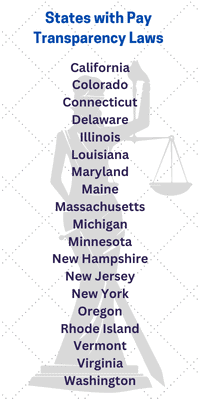
As of January 1, 2023, about 40% of all U.S. states have enacted salary transparency laws and many other states are standing by to see how this open approach plays out. In 2021, Colorado led the way with a law that requires employers list salary ranges on job advertisements for work that could be done in the state. Since then, additional states have passed similar legislation, while others have laws that say employers must disclose the minimum and maximum pay to job candidates at some point in the hiring process.
Compensation Management Software Makes it Easier to Do the Right Thing
Whether your company is in one of the states with pay transparency mandates, it may simply be the right course of action to avoid competing with other organizations using open compensation practices as a competitive advantage.
Elena Belogolovsky, a leading researcher on pay secrecy said failure to be open about pay leads to a lot of unnecessary resentment and one of her studies suggests that, with transparency, people perform better on the job. Removing the worry surrounding whether or not employees are being taken advantage of by unfair pay allows them the freedom to simply do the work they were hired to do. Belogolovsky said, “I truly believe that pay transparency will lead to better outcomes — for organizations, for individuals, and for society as a whole.”
Tony Guadagni, senior principal in the Gartner HR Practice reminded us that it doesn’t cost much for a company to be transparent with its employees regarding how wage and salary ranges are determined, and it certainly doesn’t cost anything to communicate those policies to staff. “Communication has the greatest impact on both restoring an employee’s trust in the organization and improving perceptions of pay fairness and pay equity,” Guadagni said. “Open communication also tends to be among the things that are the lowest risk to the organization.”
Working to correct perceptions of pay equity may include pay transparency, and in order to manage that effectively, organizations need a systematic and technology-focused approach to compensation management. Compensation management solutions that eliminate manual error and subjectivity can go a long way toward not only administering pay fairly, but also in instilling confidence among team members that compensation is handled fairly and with care.
Compensation management technology like that offered by CompLogix enables organizations to create and manage equitable salary models and gives HR leaders the solid platform from which to communicate accurately, openly, and effectively. If your organization is ready to get organized around compensation management to enable pay equity and transparency, give us a call. Get a no-obligation demoand learn more!










 Compensation management technology like that offered by